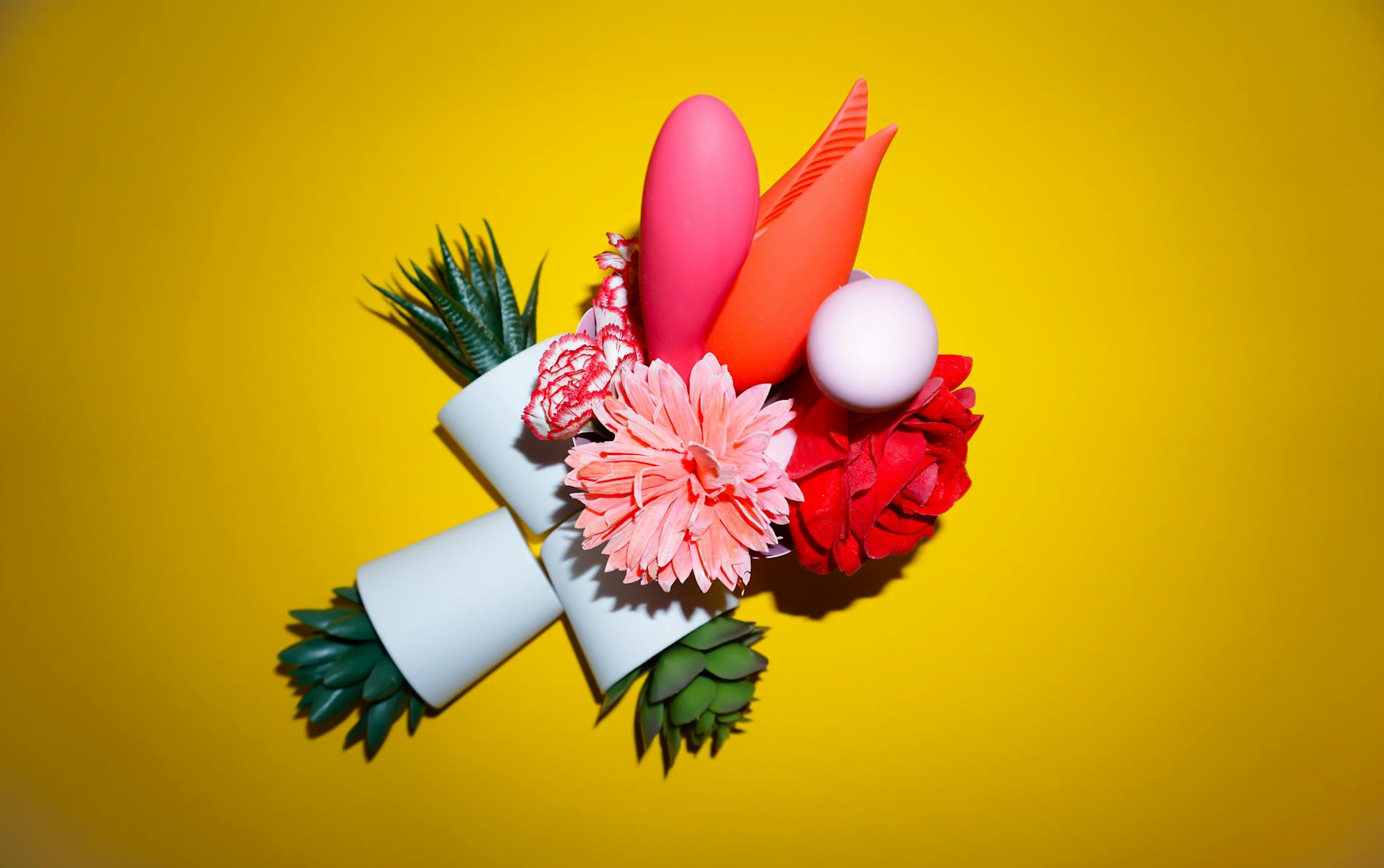
How Lemon Vibrators Help Rebuild Desire After Antidepressants
Let's be real. Antidepressants save lives. They also flatten desire in ways that nobody warns you about until you're already taking them and wondering why nothing works the way it used to.
The sexual side effects of SSRIs are not subtle, not rare, and not something you just have to accept. About 40 to 60 percent of people taking SSRIs experience some form of sexual dysfunction. That's not a minority side effect. That's the norm. And the thing nobody tells you is that your body isn't broken. Your brain chemistry has shifted, and you need a different approach to pleasure.
I work with couples navigating this constantly. The question I hear most often is: "Will it come back?" The answer is yes. But getting there requires understanding what's actually happening and finding tools that work with your neurochemistry instead of against it.
What SSRIs actually do to arousal
SSRIs work by keeping serotonin in your brain longer. That's what makes them effective for anxiety and depression. The problem is that serotonin also regulates dopamine and norepinephrine, the neurotransmitters that drive desire and arousal. When serotonin stays high, those other two take a hit.
This shows up in predictable ways. Desire feels distant, like something happening to someone else. You might be intellectually interested in sex, but your body doesn't follow. Orgasms become harder to reach. When they do happen, they often feel muted. The whole experience gets a gray filter.
Here's what's important: this is not depression creeping back in. This is a straightforward pharmacological side effect. It's not your fault. It's not your relationship. It's chemistry.
Some people can switch medications and see improvement. Others find that every SSRI causes the same issue, or that the benefits for their mental health outweigh the sexual cost. That's where rebuilding desire gets practical.
Why traditional vibration doesn't help as much
Most vibrators rely on rhythmic buzzing to build arousal. For people on SSRIs, the problem is that you need more time and more intensity to reach the threshold where pleasure actually registers. Traditional vibration burns out your tissue sensitivity faster than it builds arousal.
You end up in a frustrating loop: the sensation doesn't feel like much, so you keep turning up the intensity, and now you're numbed further. Sound familiar?
This is where lemon suction vibrators work differently. Instead of relying on vibration alone, they create a gentle suction pattern that stimulates the deeper nerve clusters in the clitoris without requiring the same tissue pressure. It feels less like friction and more like a tugging, pulsing sensation.
For people whose arousal system is quieted by SSRIs, this different pathway can be the difference between feeling something and feeling nothing.
How suction-based stimulation bypasses the SSRI flatness
The clitoris has about 8,000 nerve endings, and they're not all the same. SSRIs don't uniformly numb everything. They make surface sensation harder to access while deeper nerve clusters can still respond.
Suction toys like the Lemon Clitoral Vibrator access those deeper nerve pathways more directly. The pulsing suction creates sensation through pressure change rather than friction. It's gentler on tissue, which means less numbing. It also activates the orgasmic reflex differently than traditional vibration, which can help when the standard pathway feels blocked.
I've had clients describe it as "finally feeling something again." Not because the toy is magical. But because it's working with a different part of the nervous system that SSRIs haven't flattened as heavily.
Building back arousal takes time and patience
One of the cruelest parts of SSRI-related desire loss is that it doesn't just flip back when you switch tactics. Your brain's reward pathways have been dampened. You're retraining them.
This is where patience matters. Expecting immediate fireworks is a setup for disappointment. Instead, you're looking for small shifts: a moment where you feel a flutter, an orgasm that has a bit more depth than last time, a session where five minutes in you actually feel curious about what's next.
Start with the Lemon Clitoral Vibrator on the lower intensity settings. Many people new to suction toys start at pattern 1 or 2, even people who usually prefer intensity. The suction is doing more work for you than you think.
Budget 20 to 30 minutes. Your arousal system is learning to wake up. That takes runway.
Avoid performance pressure. This is crucial. If you're using a toy with a partner watching, or if you're mentally timing how long it takes to orgasm, your sympathetic nervous system kicks in. That's the opposite of what you need. Make time alone first. Rebuild trust in your body's capacity for pleasure without an audience or a deadline.
When desire returns, it often feels different
Here's something I've noticed with clients rebuilding arousal after SSRIs: when pleasure does return, it's often not identical to how it felt before medication. It might be slower to build. It might peak differently. Some people find their orgasms are more subtle but also more textured, more interesting.
Instead of treating this as "not as good," try noticing it as "different." Your brain chemistry has changed. Your nervous system has learned to regulate differently. Your pleasure patterns might have evolved too.
Many people find that rebuilding desire after SSRIs also means rebuilding communication with partners about what actually feels good. That's an unexpected benefit. You're not just relearning pleasure. You're often learning it differently and more honestly.
Other tools that work alongside toys
Suction vibrators are part of the solution, not the whole solution.
First, talk to your prescriber about timing. Some SSRIs have windows where side effects are less pronounced. Some people take their dose in the evening to minimize sexual side effects during the day. This is a legitimate medical conversation to have.
Second, dopamine and desire are connected. Anything that builds dopamine helps. That means movement, novel experiences, anticipation, things you actually enjoy. If you're forcing yourself into a sexual scenario that doesn't excite you, that's working against your brain chemistry. Follow your actual desire, not what you think you should desire.
Third, if you've been avoiding sex, touch, or pleasure for months, your brain needs permission to approach it again without shame. Some people find that working with a therapist trained in sex-positive practice helps reset the mental component while they're retraining the physical component.
And fourth: if desire still isn't returning after three to four months of consistent effort and exploration, your doctor might consider testosterone or a dopamine-friendly alternative like bupropion, which some people add to an SSRI specifically to counter sexual side effects.
The message that matters
Antidepressants work. Your desire returning matters too. You don't have to choose between your mental health and your sexuality.
Rebuild this slowly. Use tools that work with your current neurochemistry, not against it. Give your nervous system time to remember what pleasure feels like.
If you're looking to reawaken sensation after SSRIs have flattened it, a clitoral vibrator designed differently might be exactly what you need. The Lemon Clitoral Vibrator uses suction patterns that many people find more accessible when arousal has been quieted by medication.
Your desire is still there. Sometimes you just need to find the right door back in.
People also ask
How long does it take for sexual desire to return after starting SSRIs?
Sexual side effects usually appear within the first two weeks and tend to stabilize after about four to six weeks. Unfortunately, they often don't go away on their own. Most people report that if they're going to improve without intervention, it happens within the first few months. After that, the side effects tend to stick around unless you change something. This is why exploring new approaches now, rather than waiting, matters.
Can you take something to counteract SSRI sexual side effects?
Yes, several options exist. Some people add bupropion, which works on dopamine differently and can restore desire. Some doctors add low-dose buspirone or sildenafil (Viagra). Testosterone therapy is another option, particularly for people assigned female at birth. The key is having this conversation with your prescriber. Many people assume nothing can be done, but there are legitimate medical approaches worth discussing.
Is it normal to have zero desire after starting antidepressants?
It's common enough that you're definitely not alone. Somewhere between 40 and 60 percent of people experience sexual side effects from SSRIs. So while it's normal, it's also not something you're obligated to accept. It might feel normal, but it's a side effect, not a personality trait, and side effects can be managed.
Do suction vibrators actually work better than regular vibrators for this?
For many people, yes. The reason is neurological. Suction stimulates deeper nerve pathways that SSRIs often haven't flattened as heavily. Traditional vibration requires more surface sensation to register. When that's been dampened, suction can feel more accessible. That said, everyone's neurochemistry is different. What helps one person might not help another. The best approach is to try it and notice what actually feels different for your body.
Should I stop taking my antidepressant if it's affecting my sex life?
No. Do not stop without talking to your doctor. Stopping SSRIs suddenly can trigger withdrawal symptoms and a return of depression or anxiety. Instead, talk to your prescriber about the side effects you're experiencing. There are managed options: switching to a different medication, timing your dose differently, adding something to counteract the side effects, or working with a therapist while you explore what helps you rebuild arousal. The solution is not to stop medication. It's to be honest about the impact and explore what works for your whole self.
How do I talk to my partner about rebuilding desire after SSRI side effects?
Start by naming what's actually happening. Say something like: "SSRIs have affected my desire, and I want to rebuild it. This isn't about you, and it's not about our relationship. It's a side effect I'm working through." Then be specific about what you need: maybe you need more time alone with yourself to reconnect with pleasure before involving a partner. Maybe you need them to know that arousal will look different for a while. Maybe you want to explore together using different tools. The conversation gets easier when you're both clear that you're solving a problem together, not blaming each other.
A note on rebuilding
Desire after SSRIs isn't exactly the same as desire before. It's slower sometimes. It's different architecturally in your nervous system. That doesn't make it worse. It often makes it more intentional, more honest, more grounded in what you actually want rather than what you think you should want.
If you're at the beginning of this journey, know that it gets easier. Your body remembers pleasure. Your brain can rebuild those pathways. And when you find the right tools and the right approach for your neurochemistry, desire doesn't just return. It often comes back deeper, more real, more yours.
For more information on how different toy designs support different bodies, check out how lemon suction vibrators work differently than traditional vibration. And if you're exploring tools for the first time or returning after a long break, our guide on what to expect your first time using lemon vibrators walks through the practical side step by step.
If questions come up or you want to talk through your specific situation, we're here. Reach out at /contact.