Here's the thing about couples who stop touching
It's almost never about boredom with your partner. It's almost always about something else wearing a boredom disguise. Maybe stress built a wall. Maybe you had kids and forgot how to want anything for yourself. Maybe illness or medication changed what your body could do, and instead of talking about it, you both just stopped trying. Maybe you looked up one day and realized you'd been roommates for three years.
Most couples I work with don't need relationship therapy to fix their intimacy problem. They need permission to rebuild it without shame, and they need a bridge back into their own bodies. That's where lemon vibrators come in.
I'm not saying a toy fixes disconnection. But I am saying that introducing a tool designed for pleasure can shift the entire energy of the conversation from "we should probably have sex" (which feels like a chore) to "let's explore what feels good right now" (which feels like an invitation).
Why reconnection after disconnection is harder than it looks
When couples have stopped being physical for months or years, restarting is psychologically complex. You're not just reigniting desire. You're navigating vulnerability, potential rejection, mismatched expectations, and the weight of all that time apart.
Most people default to one of two broken paths. Path one: they try to force it. "Let's schedule sex." "Let's have date night." These rarely work because they frame intimacy as something you have to succeed at, which adds pressure instead of relieving it. Path two: they give up. "Maybe we're just not that kind of couple anymore." Which feels safer but creates resentment.
What actually works is a third option. You agree that pleasure matters. You agree to start small, without performance expectations. And you introduce something that removes the pressure of having to know what you're doing.
How a clitoral vibrator changes the dynamic
Let's say you and your partner haven't been sexual in six months. Starting with penetration or traditional foreplay carries all sorts of implicit expectations. You're both waiting for the other person to "know what they're doing." You're both nervous it'll be awkward. Someone has to take the lead, which feels risky.
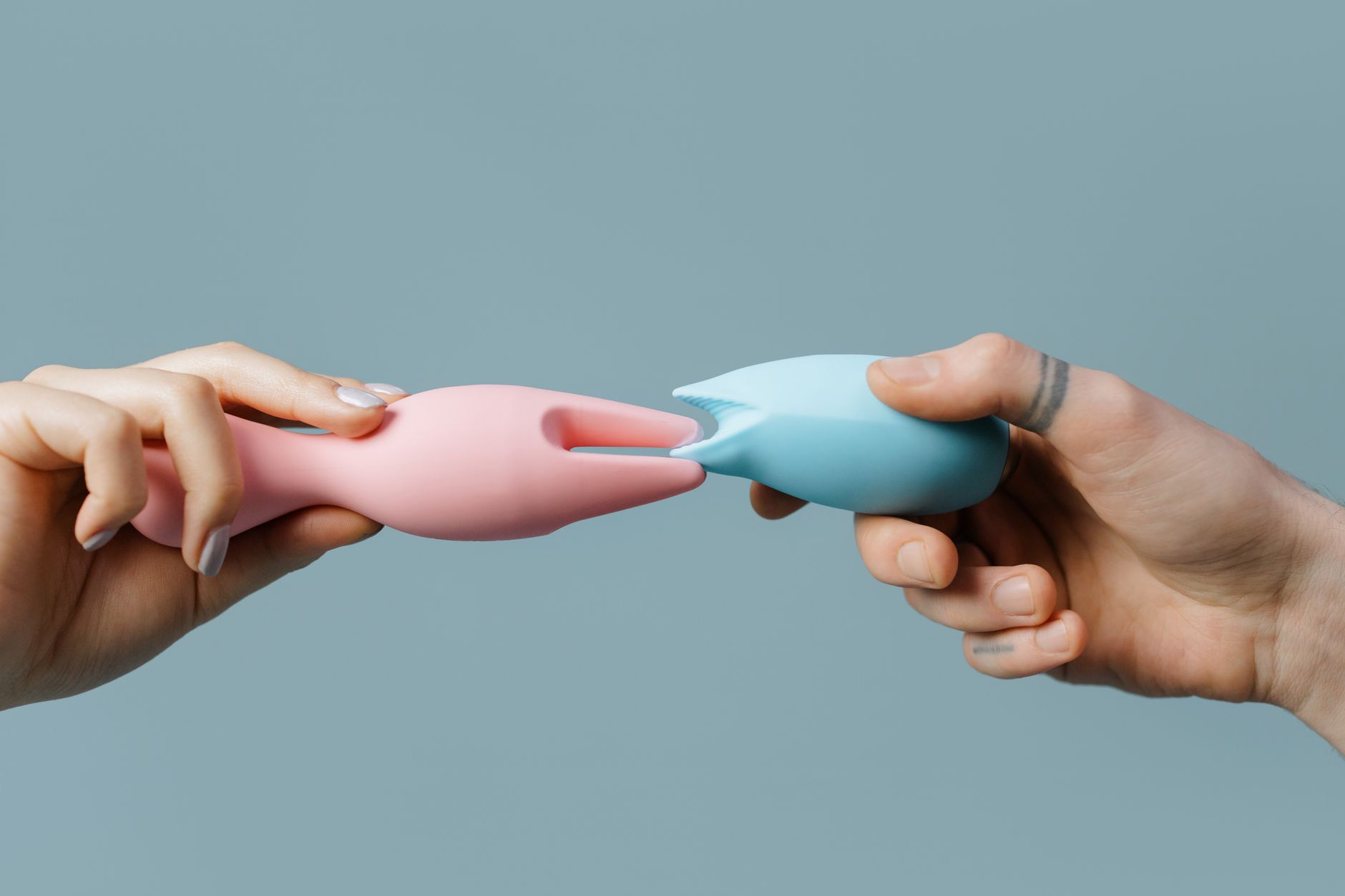
A lemon clitoral vibrator flips this. The device isn't about performance. It's about sensation. You're not trying to make something "work." You're just exploring what feels good.
For the partner receiving stimulation, this is a revelation. Suddenly you're not waiting for your body to cooperate with someone else's rhythm. You're experiencing pleasure on your own terms. That matters.
For the partner who's nervous about being "good at" intimacy again, a toy is permission to step back and observe. You're not the sole source of pleasure anymore. You can focus on your partner's responses, on touch, on connection. That actually feels less pressured.
The conversation you need to have before you bring it in
Don't surprise your partner with a vibrator. That's how you get either genuine interest or deep defensiveness, and you won't know which until it's awkward.
Instead, pick a moment when you're not in bed. Maybe you're on the couch, maybe you're driving. Some place where the conversation feels less high-stakes. Say something like this:
"I miss being close to you. I know we've been disconnected for a while, and that's not about us being wrong for each other. I think part of it is that we've both gotten nervous. I was thinking about trying something that might help us remember what pleasure feels like together. No pressure. But I wanted to ask if you'd be open to exploring it."
Then listen. If your partner is hesitant, ask why. Is it a "not interested in toys" thing, or is it "I'm scared of failing at this" thing? Those are different conversations.
If your partner is interested, mention specifically what you're thinking. Lemon vibrators are a good entry point because they're designed around sensation rather than deep penetration. They're not intimidating. They're not gendered. They're accessible.
What to expect the first time you use one together
Take your time. Set aside at least 45 minutes, not because you need it all, but because knowing you have it removes the anxiety of being rushed.
Start with what you already know feels good. Touch each other. Build arousal the way you normally would. Then, when things are warming up, introduce the vibrator. Not as "now we use the toy instead of touch." As "let's layer this in with what we're already doing."
Lemon clitoral vibrators work through suction and pulse rather than pure vibration, which means the sensation is often gentler and more intense than traditional vibration at the same time. Start on a lower setting. You can always increase. You can't un-ring a bell if something feels too intense.
If it feels good, keep going. If it feels strange or uncomfortable, pause. Talk about it. "That's interesting but maybe different" is useful data. So is "I love this." Both tell you something.
The three ways this reconnects you that have nothing to do with the toy
First, you're collaborating on something that matters. You're not debating whether to have sex. You're exploring together. That's a different energy entirely.
Second, you're breaking the shame cycle. Disconnected couples often feel ashamed about the disconnection, which creates more disconnection. Bringing in a tool that says "pleasure is normal and worth pursuing" interrupts that loop.
Third, you're remembering that your partner desires you. This is the part that often gets missed. When your partner is responsive to touch, when they're experiencing pleasure with you, your brain registers that as "I am desirable to this person." That shifts everything.
How often and how to build from here
If the first experience went well, you don't need to use a vibrator every time you're intimate. You're not replacing your own touch. You're adding an option.
Some couples find that using a lemon sexual toy once a week helps them rebuild a cadence. It gives you something to anticipate. It gives your nervous system permission to remember what pleasure feels like.
Over time, you'll probably find your own rhythm. Maybe you use the vibrator sometimes. Maybe you use it as foreplay. Maybe you discover you want to try other things because the first barrier has been broken and you're no longer terrified of being vulnerable with each other.
The point isn't the toy. The point is what the toy makes possible. It's permission. It's a conversation starter. It's evidence that your partner is willing to prioritize connection, which is actually what rebuilds trust after disconnection.
When disconnection runs deeper than intimacy
Here's what I need to say clearly. If disconnection is happening because of infidelity, contempt, or unresolved conflict, a toy won't fix that. It might feel good in the moment, but it won't address the actual problem.
If you're disconnected because you haven't talked in months, haven't laughed together in a year, or can't remember the last time you felt safe with your partner, you probably need a therapist more than you need a vibrator.
A lemon vibrator works best when the disconnection is circumstantial. Life got busy. Stress made you both shut down. Illness made you afraid to touch. Kids meant you never had privacy. You both want connection but don't know how to start.
If that's your situation, reconnection is absolutely possible. And yes, a tool designed for pleasure can help. But only if you're also willing to be vulnerable, to communicate, and to choose your partner again.
FAQs: Rebuilding intimacy with lemon vibrators
Should we talk about our desire for the toy before or after we try it?
Before. Always before. The conversation removes shame and sets expectations. "Hey, I found this thing I'd like to try together" is a very different opener than pulling it out during sex. The first one creates partnership. The second creates surprise (or confusion). You want partnership.
What if my partner thinks wanting to use a vibrator means I'm not satisfied with them?
That's the most common hesitation I hear, and it deserves a direct answer. Using a toy doesn't replace your partner's touch. It's not a referendum on their sexual skill. It's an acknowledgment that pleasure is complex and that adding sensation doesn't diminish connection. Some partners need to hear this explicitly. "I want this because I want to feel good, and I want to feel good with you. This is us exploring together, not you being replaced." That matters.
How long does it usually take before reconnection actually feels natural again?
It depends on how long you were disconnected. If it's been a few months, expect maybe 4 to 6 weeks of intentional practice before it feels less deliberate. If it's been years, give yourself a few months. You're rewiring your nervous system a little bit. That takes time. And that's okay.
Can we use a lemon clitoral vibrator if we're trying to rebuild intimacy but aren't having penetrative sex?
Absolutely. In fact, this is one of the most common ways couples rebuild. You're removing the pressure to have "traditional" sex. You're just exploring sensation together. That's actually a really smart way to start because it keeps things low-pressure and centered on what feels good.
What if the vibrator makes things more awkward instead of less?
That's usually a sign you need to pause and talk. Awkwardness often means something in the conversation wasn't clear. Maybe your partner is using it but doesn't actually want to. Maybe the sensation wasn't what they expected. Maybe it stirred up something vulnerable. Any of those is fixable with honesty. "This didn't feel right. What happened?" is a conversation. "We never speak of this again" is avoidance.
Is there a "right" way to use a lemon intimate toy during foreplay?
No. There's your way. Some couples use it as part of mutual touching. Some use it as one partner focuses on the other's pleasure. Some people use it solo while their partner watches, which is its own kind of intimate. There's no script. The script is whatever you discover together.
Reconnection is possible, and it's worth the discomfort
Couples drift. That's not a failure. That's what happens when you're both managing stress, kids, work, aging parents, illness, grief. You survive. You don't always thrive.
But thriving is possible. It requires deciding that pleasure and connection matter. It requires vulnerability. It requires willingness to try something new, even if it feels awkward at first.
A lemon vibrator isn't the solution to disconnection. But it can be the permission slip. It can be the conversation starter. It can be the moment where you both remember that your partner is a person you desire, and that desire is worth protecting.
If you're ready to rebuild, that's worth everything you're feeling nervous about. Your connection on the other side of this is waiting for you.
Ready to start the conversation? Get in touch at /contact if you want resources or have questions about how to approach this with your partner.