The gap that shows up in bed
You're with someone you care about. The emotional connection is real, the attraction is there, and you want sex to feel good. But somewhere between the kissing and the climax, pleasure goes missing. Not because your partner is doing anything wrong. Not because you don't want to be there. But because your brain and your body stopped talking to each other the moment things became partnered.
This disconnect is shockingly common, and almost nobody talks about it directly.
Why pleasure and intimacy sometimes split apart
Here's what happens neurologically. When you're alone, your nervous system has a single job: chase sensation. Everything is about the stimulation. When a partner is involved, your brain suddenly splits its attention between at least three things at once: the sensation, your partner's pleasure or experience, and the pressure to perform or respond "right." That cognitive load kills arousal.
Add in the fact that partnered sex rarely provides the exact kind of clitoral stimulation your body needs to orgasm, and you get a mismatch between intimacy and pleasure. You feel close to your partner. You do not feel turned on. These should reinforce each other. Instead, they feel like competing demands.
The shame that follows makes it worse. You start thinking something is broken about you, or about the relationship. Neither is usually true.
The physical reason penetrative sex alone often doesn't work
Let's be blunt: vaginal penetration, on its own, does not reliably stimulate the clitoris with the kind of direct, consistent pressure most people need to orgasm. The angle is wrong. The rhythm rarely matches. The intensity feels off. This isn't a failure of your partner or your body. It's just anatomy.
Meanwhile, your emotional brain is trying to show up for intimacy. You want to feel close. You want to feel desired. But the physical stimulation isn't building toward anything, so you're stuck in a loop of "I should be enjoying this more than I am."
What breaks the loop is naming it: you need two different kinds of touch at the same time. Your partner can provide the emotional and penetrative component. A clitoral vibrator handles the clitoral stimulation your body actually needs to build arousal.
How a lemon vibrator fills the gap
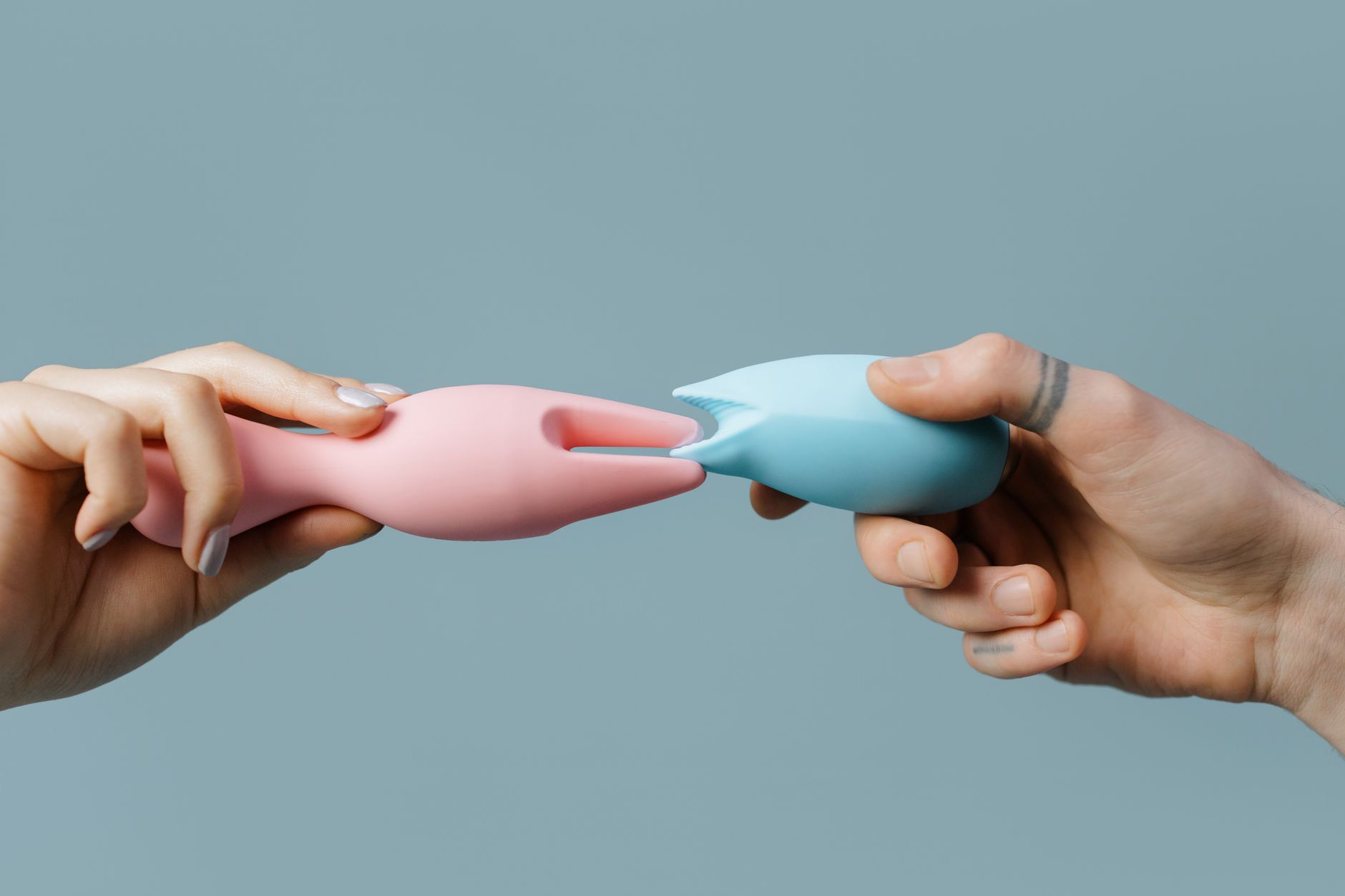
A lemon clitoral vibrator like the Lem gives you back control of your own pleasure while staying physically and emotionally present with your partner. This sounds simple, but it rewires the entire experience.
Instead of waiting for your partner's touch to create arousal that never quite arrives, you're actively building it in parallel. Your partner is inside you or next to you. The vibrator is on your clitoris. Your nervous system gets both the intimacy and the sensation it needs, and they reinforce each other instead of competing.
This is not a replacement for your partner. It's an amplifier of the connection. Many couples report that adding a vibrator actually deepens their sense of closeness because both people are focused on the same goal: your pleasure.
The permission piece matters more than the tool
Here's the thing that often surprises people: the vibrator alone isn't the magic. The magic is the permission you give yourself to take your pleasure seriously while still being with your partner.
For most people who were socialized as women, there's a deep, quiet training that your job during partnered sex is to receive and respond, not to actively create sensation. A vibrator makes that impossible. You can't passively use a vibrator. You're engaged. You're responsible for your own arousal. You're saying, out loud with your body, "My pleasure matters, and I'm not waiting for it to happen by accident."
Once your partner sees that permission in action, something shifts. They stop taking your silence as contentment. They see arousal building. They feel you responding. The intimacy becomes mutual instead of one-directional.
Starting the conversation with your partner
If this is new territory for both of you, the conversation is the hardest part. Here's what I'd say: lead with the truth, not the apology.
Not: "I'm sorry I need a vibrator to enjoy sex with you."
Yes: "I want to actually orgasm with you, and my body needs clitoral stimulation to get there. I'd love to try using a vibrator so we can both feel good."
That's it. You're not asking permission. You're inviting partnership. If your partner responds with insecurity or defensiveness, that's separate conversation about what's underneath that reaction. But most partners are relieved. It removes the pressure to be everything your body needs in one touch.
How to actually use it together
Start slow. Literally start with lower intensity settings on a Lem clitoral vibrator, around patterns 1 or 2. You want to build arousal, not chase orgasm. Let your partner see what makes you respond. Let them participate if they want to hold it, or just observe. Observation itself is intimate.
Timing matters too. Use the vibrator before penetration so you're already aroused when your partner enters. Or use it during, depending on your position and comfort. Some people find it works best at the end, as a pathway to orgasm while your partner is still involved.
The key is treating it as collaborative. This isn't something that happens to you while your partner watches. It's something you do together, even if only one person is holding the tool.
When pleasure returns, what changes
Once you start orgasming during partnered sex, something else shifts that nobody warns you about. Your body relaxes. Your brain stops cycling through "Am I taking too long?" Your presence becomes real instead of performed. That presence is what your partner actually wanted all along. Not a fake orgasm or enthusiastic moaning. Your actual, genuine pleasure.
When it's more complicated than that
Sometimes the disconnect between intimacy and pleasure isn't just physical. Sometimes it points to a real mismatch in how you and your partner experience closeness, or desire, or safety. A vibrator can't fix those things. But it can buy you space to notice whether they exist.
If you're using a vibrator and pleasure still doesn't arrive, or if using it together creates tension, that's worth exploring with a therapist. Not because something is wrong with you. But because those tensions often contain information about the relationship that's useful to understand.
The bigger shift
What I've learned from working with couples is this: most of the intimacy problems that show up in bed actually start with the idea that one person should be able to meet all of another person's needs. That's impossible. The fastest path to better sex isn't better technique or more romance. It's getting realistic about what one body can do, and then building a system where both people get what they actually need.
A lemon clitoral vibrator is part of that system. Not because vibrators are magical. But because they make the truth unavoidable: your pleasure is your responsibility, and sharing that responsibility with your partner is more intimate, not less.
People also ask
Will using a vibrator with my partner make them feel inadequate?
Usually the opposite. Most partners feel relieved once they understand that a vibrator isn't a replacement but a tool that lets both people experience more pleasure together. If your partner does feel inadequate, that often points to beliefs about what sex "should" look like that are worth examining separately. A therapist can help you both work through that.
Can I use a lemon vibrator during regular penetrative sex?
Absolutely. Depending on your position and comfort, you can use a clitoral vibrator while your partner is inside you. Some positions work better than others. Spooning, for instance, gives easy access. Experiment to find what feels comfortable and connected for both of you.
How do I bring this up without it feeling awkward?
Start with honesty about your body, not criticism of your partner. "I think I'd orgasm more easily if we added a vibrator" is different from "Sex isn't working." Frame it as something you want to explore together, not something you need to fix a problem he or she caused.
Does using a vibrator mean my partner and I aren't sexually compatible?
No. Sexual compatibility is about willingness to adapt, communicate, and prioritize each other's pleasure. Many couples find that adding a vibrator actually improves compatibility because both people start experiencing more pleasure. Incompatibility looks like refusing to acknowledge that something isn't working.
What if I feel self-conscious using a vibrator in front of my partner?
That's normal. Consider starting alone to build comfort with it, or start with the vibrator outside the bedroom entirely. Talk about what self-consciousness comes up. Often it's about permission, not the tool itself.
Can a vibrator help if my partner finishes much faster than I do?
Yes. In fact, this is one of the most common timing mismatches, and a vibrator creates a parallel path to pleasure that doesn't depend on your partner's rhythm. Once you're aroused, your partner can focus on their own experience without pressure to wait.