
Pleasure doesn't come back on a schedule
Relationship trauma doesn't just leave emotional scars. It fundamentally alters how your body responds to touch, arousal, and intimacy. Your nervous system learns to be defensive in situations that once felt safe. That defensive posture doesn't simply switch off when the relationship ends or when you decide you're ready to feel desire again.
I work with clients who've survived infidelity, emotional abuse, coercion, and betrayal. The most consistent pattern I see is not "I don't want to feel pleasure anymore." It's "My body won't cooperate, and I don't know why." They're trying to access the same arousal pathways that existed before, but the neural routes have been rerouted. Healing is real. It's also gradual.
Why trauma interrupts arousal at the physical level
When you experience relationship trauma, your amygdala (the brain's threat detector) becomes hyperactive. Over months or years of that hypervigilance, your parasympathetic nervous system (the one that allows relaxation and arousal) gets suppressed. Sexually, this shows up as:
Delayed or absent lubrication. Your body isn't flowing the way it used to. This isn't a hydration problem, usually. It's a nervous system problem.
Clitoral numbness or muted sensation. The nerves are still there, but the signal isn't getting through. Your brain is still in protection mode, dampening sensation as a survival mechanism.
Difficulty with orgasm. Even when you're trying, even when you're with someone you trust, the pathway to orgasm feels blocked or requires extraordinary effort.
Touch aversion. Some kinds of contact feel intrusive or triggering, even if you logically know they're safe now.
Here's what's crucial: none of this means you're broken. It means your body did exactly what it was supposed to do. It protected you. Now it's learning that protection is no longer necessary. That learning takes time.
The role of gentle, pressure-free stimulation
When pleasure is rebuilding, aggressive vibration or intense friction can feel jarring. Your nervous system is already hypervigilant. A traditional vibrator that demands intense sensation can feel like another demand your body has to meet, which is the opposite of healing.
Lemon clitoral vibrators work differently. Suction-based stimulation engages nerves without pressure, friction, or the sensation of being "done to." The gentle draw of suction feels more like an invitation than a demand. This matters deeply in trauma recovery, where consent and control need to be reestablished from the ground up.
When you're the one controlling the intensity, the pattern, the rhythm, and when to pause, you're actively rewiring your nervous system's relationship to pleasure. Each time you stop because you want to, your brain registers that your body is safe and that your boundaries matter. That's how healing happens.
Starting with zero pressure (literally)
If you're rebuilding pleasure after trauma, here's what I recommend with Lemon Intimate Toy products:
Start with pattern 1. Not because you're timid, but because your nervous system is learning a new language. Let it whisper before it shouts. Most people with trauma histories find that lighter patterns feel safer and, paradoxically, lead to deeper sensation over time.
Use it in short bursts. Five minutes. Stop. Check in with your body. Do it again tomorrow. This isn't about reaching orgasm quickly. It's about your nervous system gradually learning that pleasure is available and safe.
Don't use it as a pressure to climax. This is where so many people derail their own healing. The goal isn't to achieve an orgasm. The goal is to feel sensation without judgment. Some days that's a warm buzz. Some days it's nothing. Both are fine.
Pause if anything feels weird. Not uncomfortable (that's normal during healing). Weird. Your body knows the difference. Listen to it.
The role of partner communication (or the choice not to have a partner)
If you're healing from relationship trauma within a relationship, your partner needs to understand that your nervous system is recalibrating. This isn't a personal rejection of them. It's a neurological process.
I often recommend that healing happens first in solo play. There's less pressure, less performance anxiety, less need to worry about someone else's experience. Once your nervous system begins to trust that pleasure is safe and available on your terms, partnered intimacy becomes easier to navigate.
If you're single, solo play with a Lemon vibrator becomes a reclamation tool. You're literally teaching your body that pleasure is yours, that control is yours, that your boundaries matter. That's not selfish. That's essential.
Why suction matters more than vibration during healing
Trauma-informed therapists often talk about bottom-up regulation. That means working with the body's nervous system directly, not trying to think your way out of it. Vibration can feel scattering to a nervous system that's already fragmented. Suction feels more contained, more focused, more like a gentle hold.
Many clients tell me that the Lem (Lemon's primary clitoral vibrator) feels different from other devices they've tried. The suction action feels less "to me" and more "with me." That subtle shift in agency is where healing actually lives.
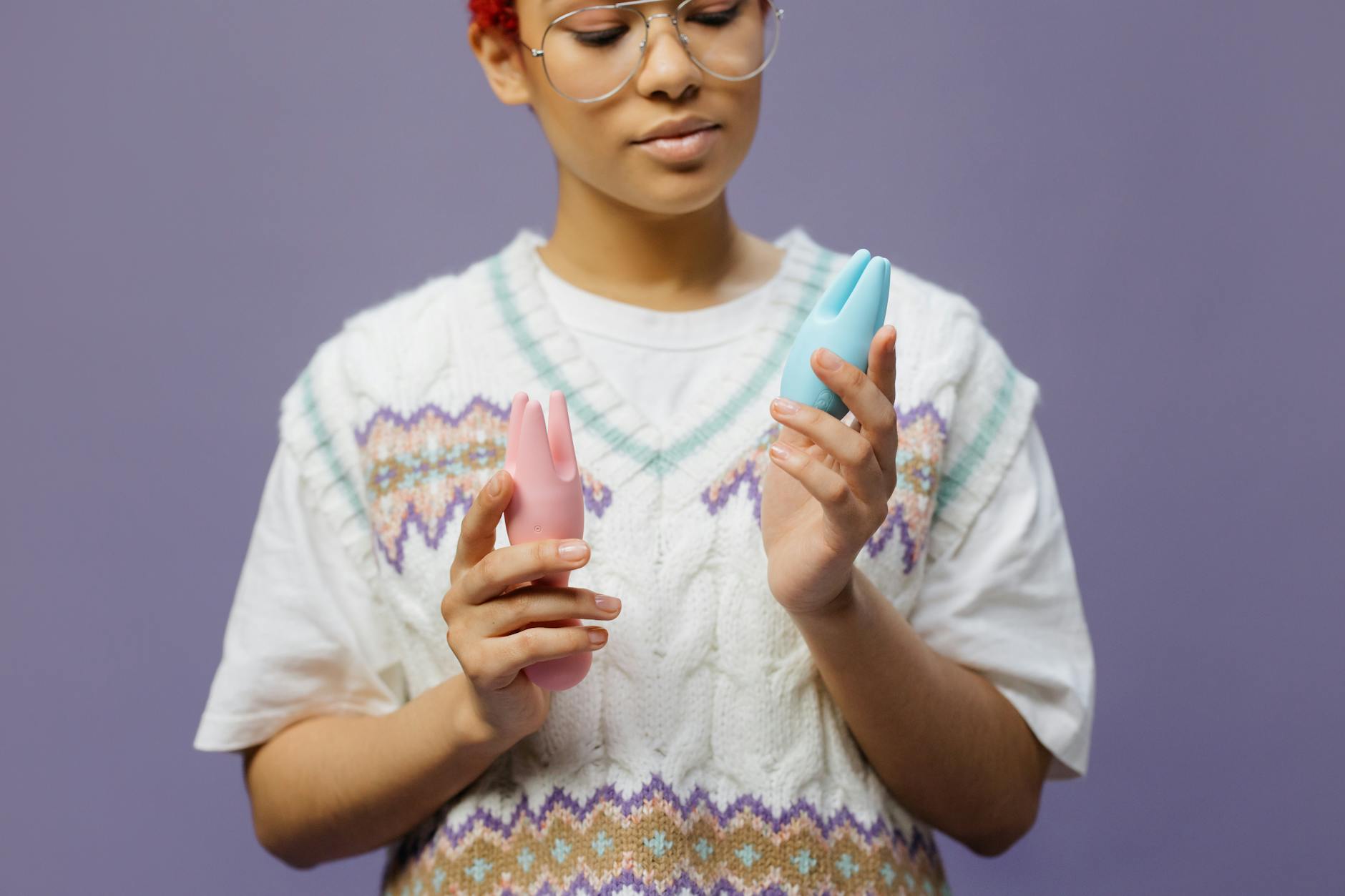
Photo by cottonbro studio on Pexels
The timeline is different for everyone
I had a client who reclaimed her pleasure six months after leaving an emotionally abusive marriage. Another took three years. Neither was wrong. The depth of the trauma, your access to therapy, your nervous system's baseline sensitivity, your current stress load, whether you're sleeping well, whether you feel genuinely safe in your living situation. All of it factors in.
The mistake people make is comparing their timeline to someone else's. "If she could do it in six months, why am I still struggling at two years?" Because you're a different person with a different nervous system and a different history. Your timeline is the right one.
When to seek support beyond a vibrator
A clitoral vibrator is a tool for reconnection, not a replacement for therapy. If you're healing from relationship trauma, working with a trauma-informed therapist (ideally one trained in somatic work) will accelerate that healing exponentially. Some therapists specialize in sexual trauma recovery specifically. That's worth finding.
If pain accompanies your reduced arousal, see a pelvic floor physical therapist. Trauma can create pelvic floor tension that suppresses sensation and pleasure. That's treatable.
If you're several years out from the trauma and pleasure still hasn't returned, talk to a doctor. Sometimes medications (like antidepressants) or undiagnosed health issues can contribute. Get that ruled out.
But if you're in the early stages of healing, or if you're further along and just need a tool that feels gentle and empowering, a Lemon vibrator can be part of your reclamation. The suction-based design means no pressure, no vibration overload, just a quiet return to sensation on your own terms.
FAQ: Rebuilding Pleasure After Trauma
Is it normal for arousal to disappear completely after relationship trauma?
Completely normal. Trauma doesn't just affect mood. It suppresses the parasympathetic nervous system, the one responsible for relaxation and arousal. Your body was protecting you. That shutdown is a feature, not a bug. Gradually, with safety and time, that system can reawaken.
Can I use a vibrator if touching myself feels triggering?
Yes, but start different. Some people find that external stimulation (like a suction-based vibrator) feels less invasive than fingers. The device creates a sense of separation that can feel safer. If even that feels too much, work with a therapist first. There's no rush.
How long until I feel pleasure like I did before the trauma?
You might feel pleasure differently, and that's okay. Some survivors describe pleasure after healing as deeper, more grounded, less performance-focused. It may not look like before. It can be richer.
Should I tell my partner I'm using a vibrator for healing?
That depends on your relationship and your comfort level. If you're partnered, transparency often helps. "I'm rebuilding my sense of safety and pleasure. I'm doing that with a vibrator because I need to control the experience." Most partners appreciate understanding the context.
What if I still can't climax after several months of trying?
Orgasm isn't the goal during trauma recovery. Sensation is. If you can feel warmth, tingling, or any pleasurable sensation, your nervous system is healing. Climax will often follow, but not always, and that's fine. Some survivors discover they prefer pleasure without orgasm.
Is there a risk of becoming dependent on vibrators for pleasure?
No. Vibrators don't rewire your body. Your nervous system does. The vibrator is a tool that helps you practice accessing arousal in a safe way. As your nervous system heals, pleasure becomes available in more contexts, not fewer.
You don't have to rush this
Healing from relationship trauma is not a productivity problem. You don't optimize it. You don't set timelines and push through. You show up for your body with patience, gentleness, and the understanding that reclaiming pleasure is an act of resistance against what was taken from you.
A Lemon vibrator can be part of that reclamation. It can be a small, gentle tool that says: your pleasure matters, your body matters, your boundaries matter. That's not nothing.
If you have questions about your healing journey or how to approach pleasure rebuilding, we're here. Reach out at /contact and we can talk through what might help.