
Let's be real about what happens after five, ten, or twenty years
Attraction doesn't vanish after you've been with someone for years. It transforms. The novelty neurochemistry fades. Your brain stops flooding dopamine every time they text. The body stops lighting up at the sight of them the way it did in month three. This isn't betrayal or failure. It's neurobiology. It's also completely workable if you know what you're actually dealing with.
The couples I work with often describe this as "losing the spark." What they mean is that sex has become routine, desire feels like an obligation, and touch sometimes feels more like habit than connection. Here's the part nobody tells you: that's not the end of the story. It's a pivot point.
Why arousal actually changes in established relationships
Early-stage relationships run on novelty and uncertainty. Your nervous system is activated, your brain is flooding with dopamine and norepinephrine. You can't predict what they'll do, where they'll touch you, what happens next. That unpredictability is neurologically addictive.
After years together, you know exactly what's coming. You know their rhythm, their patterns, what they want. Your body no longer has to be on high alert. From an evolutionary standpoint, this is efficient. From a pleasure standpoint, it's deadly boring.
The second piece: familiarity removes friction. Early on, desire and arousal are separate. Desire happens first ("I want this"), then arousal follows ("My body is responding"). After years, the pathway gets worn smooth. You might not feel much desire at all, and because there's no desire phase, there's no arousal either. You're stuck in neutral.
Third, and this matters: if sex has become predictable and pressured (especially if one partner is initiating and the other feels obligated), the nervous system starts associating sex with stress, not pleasure. Your body literally learns to shut down before anything even starts.
Why lemon clitoral vibrators restart the system
Here's what lemon vibrators do that partners often can't alone. They introduce sensation that's different from what your nervous system has memorized. A lemon sucker like the Lem uses air-pulse technology instead of traditional vibration. That novelty? Your brain registers it as new information.
Novelty reactivates arousal pathways. When sensation is unfamiliar, your nervous system has to pay attention. That attention is the gateway back to desire. This isn't about replacing your partner. It's about interrupting the autopilot so your body remembers how to respond.
Lemon adult toys also remove the pressure dynamic, which is crucial. If one partner has been the pursuer and the other has been stressed about disappointing them, introducing a vibrator into partnered sex can paradoxically reduce pressure. Suddenly it's not "Can I make this happen?" It's "Let's explore this together." Different energy entirely.
How to reintroduce toys without it feeling like an admission of failure
Okay, so the conversation matters here. Most couples avoid talking about it altogether, which means toys get smuggled in furtively or suggested in a way that feels like criticism. ("Maybe we should try something to spice things up" translates as "What we're doing isn't working.") That lands as rejection.
Instead, frame it as exploration, not repair. "I've been thinking about trying something new, not because anything's wrong, but because I want us to find new ways to feel good together." That's different.
Show them the toy before sex happens. Let them hold it, ask questions. Lemon vibrators look approachable and intentional. They're not intimidating. When you're both comfortable with it in a non-sexual context, introducing it during sex feels natural instead of surprising.
Start with solo exploration first, honestly. Use it on yourself when your partner isn't around. Get familiar with what feels good, what sensations wake your nervous system up. When you know your own map, you can actually guide your partner. "This pattern feels amazing" is useful information. Fumbling around together while also trying to recover desire is just adding friction.
The arousal-reset protocol
Here's how I typically recommend couples use lemon sexual toys to rebuild that disconnected arousal:
Week one through two: Solo rediscovery. Use your Lem or preferred lemon vibrator alone. Not for a goal (orgasm). For sensation. Try different patterns at different intensities. Notice what makes your nervous system actually perk up. Notice what feels boring or numb. This data is important. You're teaching your body that pleasure is possible again.
Week three: Introduction with your partner present. Start with foreplay that doesn't immediately involve the toy. Kiss, touch, take time. Then introduce the vibrator as part of that. Not as the main event. As one element among many. Let your partner use it on you if that feels okay. Let them see your body respond. That sight reactivates their arousal pathway too, by the way. Watching a partner's pleasure is neurologically activating.
Week four onward: Experimentation. Now that novelty is back in the system, you have room to play. Try different intensities, patterns, timings. Try it during different parts of your usual routine. The goal is to interrupt the autopilot completely. You're essentially teaching your nervous system that sex with this person can still be unpredictable.
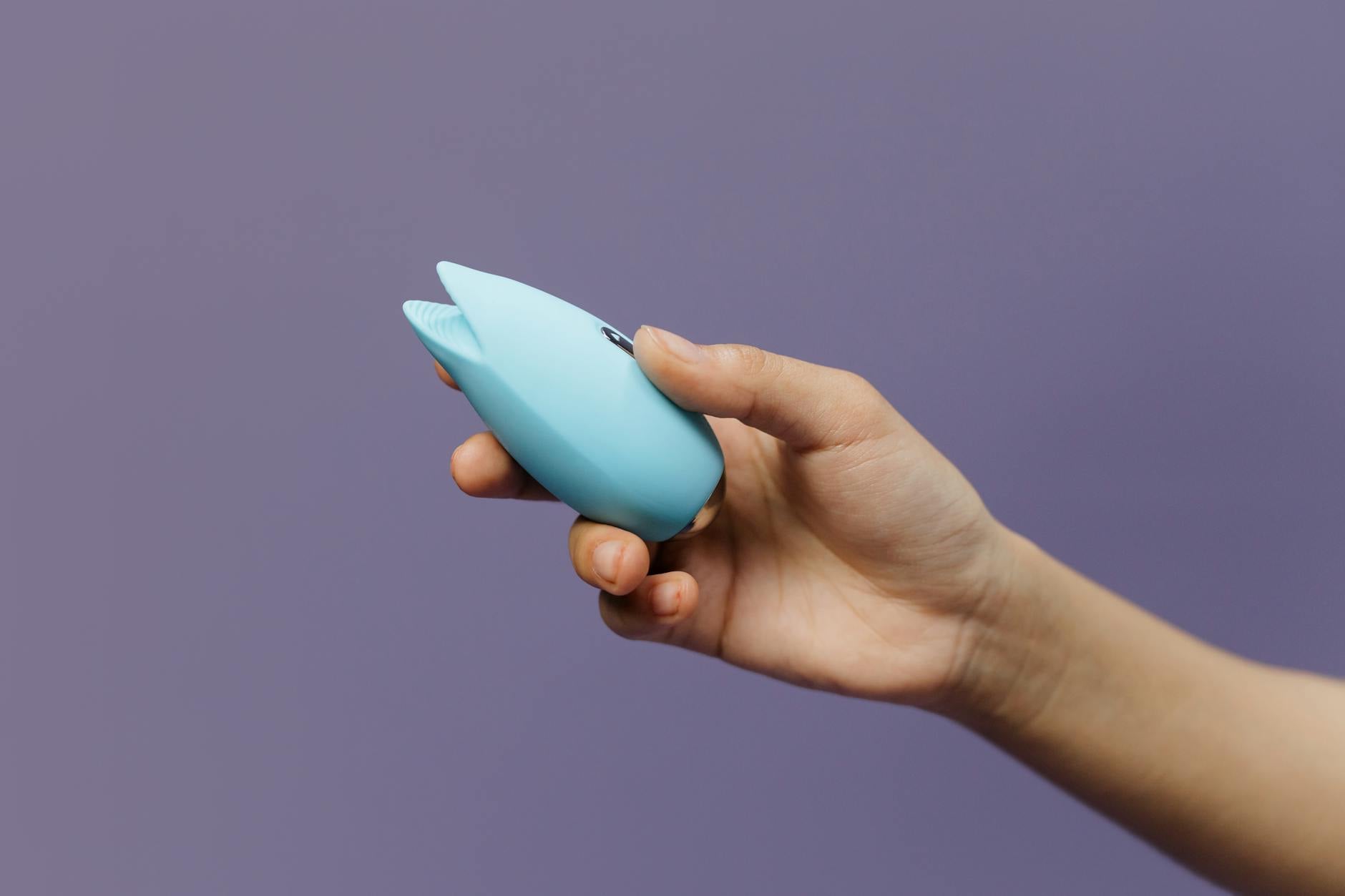
Photo by cottonbro studio on Pexels
What changes when you actually do this
Couples often report three shifts:
One: Desire returns, but differently. It's not the frantic, obsessive desire of early-stage relationships. It's calmer, more intentional. It's desire that lives alongside commitment instead of existing in conflict with it. You're choosing this person's pleasure again. That's different from being unconsciously driven toward it.
Two: Sensitivity recalibrates. If you've both been going through the motions with the same pressure and pattern, nerve endings get desensitized to it. Introducing a new stimulus (especially something like lemon clitoral vibrators, which work differently than fingers or penis) wakes those nerves back up. Sensation that felt numb suddenly feels present again.
Three: The pressure releases. Once a partner sees that you can have pleasure independently, using a tool that doesn't require their specific touch or timing, they often relax. They're no longer carrying the weight of your arousal. That paradoxically makes them more attracted to you and more present in sex. Less performance, more connection.
The conversation after is as important as the sex itself
Here's what most couples miss: they use the toy, have better sex, and then never talk about it. Then next time, the same hesitation surfaces. Build in a check-in. "That felt different. I liked when you..." Not analyzing it to death. Just naming what worked.
This matters because it signals that you're collaborating instead of competing. You're both invested in the other person's pleasure. That's the actual foundation of lasting attraction.
When to know if this is actually a toy problem or a bigger one
Sometimes attraction fades because arousal is genuinely stuck. Sometimes it fades because you're not actually connected outside the bedroom anymore. Sometimes it fades because one person is resentful or checked out. A Lemon Intimate Toy can help with the first thing. It can't fix the second or third.
If you've tried exploring together, introduced new sensation, and there's still no shift, that's probably a signal to see a couples therapist. Not because something's broken beyond repair. But because attraction is always rooted in something deeper. Sometimes that's physiology. Sometimes it's emotional safety. Sometimes it's both.
The toy can absolutely help reset physiology. But only you and your partner can rebuild trust, vulnerability, and presence. Those are the actual foundations.
The actual outcome
Most couples don't need to find their "spark" again. That's a myth anyway. What they need is to rebuild curiosity about each other, to interrupt enough of the autopilot that sex feels like something they're choosing together instead of something they're both tolerating.
Lemon vibrators, used thoughtfully, do that. They introduce novelty. They reactivate sensation. They remove pressure. They give you something new to explore together. And sometimes that's enough to remember why you chose this person in the first place.
People also ask
How do I bring up using a lemon vibrator to my long-term partner without making them feel inadequate?
Frame it as expansion, not correction. Try: "I've been curious about trying something new together. Not because anything's wrong, but because I want to discover more ways we can both feel good." Avoid anything that sounds like complaint or comparison. Show them the toy in a neutral moment. Let them hold it, ask questions. Position it as something you're exploring as a team, not something one of you is doing to the other.
Will using a vibrator during partnered sex make my partner feel replaced?
Often the opposite happens. When partners see that a toy can enhance pleasure without replacing their touch, they typically feel relieved and more confident. Many couples find that introducing toys actually improves their sex because it removes the pressure to be everything. That reduction in performance anxiety usually increases connection.
How long does it typically take to rebuild arousal using lemon clitoral vibrators?
There's no fixed timeline, but most couples notice meaningful shifts within three to four weeks of consistent exploration. Some notice changes immediately (new sensation is powerful). Others need longer to rebuild trust in their own desire. The key is consistency and patience. You're retraining your nervous system, not flipping a switch.
Is it normal for desire to feel completely flat after years together?
Completely normal. Desire naturally shifts when novelty fades and routines settle. What's not normal is suffering through it without exploring solutions. Flatness usually signals that your nervous system has learned to expect predictability. That's absolutely workable with intention and tools like lemon vibrators.
Can using a vibrator alone fix relationship problems that show up as low desire?
No. If low desire is rooted in resentment, disconnection, or broken trust, a toy is a band-aid, not a solution. But if low desire is rooted in habituation and desensitization, then yes, tools like Lemon Intimate Toy products can genuinely help. The key is knowing which one you're dealing with. When in doubt, a couples therapist can help clarify that.
Should we use a vibrator every time we have sex?
No. That defeats the purpose. You're trying to interrupt autopilot and reintroduce novelty, not create a new routine. Use it sometimes. Skip it other times. The variation itself is arousing to the nervous system. Mix it into your usual patterns inconsistently. That unpredictability keeps sensation novel.
The bottom line
Attraction fading after years together isn't a sign that you picked the wrong person. It's a sign that your nervous system has adapted to predictability. That's both a problem and an opportunity. Lemon vibrators, used with intention and honest conversation, can absolutely help reset that adaptation. They introduce novelty, reactivate sensitivity, and give you a reason to be curious about each other again.
The real work is the conversation. The toy is just the catalyst.