Let's talk about what nobody mentions at the six-week checkup
Your OB clears you for sex. Your partner wants to reconnect. And your body feels like it belongs to someone else. Clitoral tenderness after childbirth is not a quirk. It's a physiological reality that most people expect to disappear once bleeding stops, but doesn't always cooperate with that timeline.
Here's what's happening, and why Lemon vibrators designed for nuanced stimulation can matter more than another round of reassurance that "it'll go back to normal."
What delivery actually does to clitoral tissue
Even with a straightforward vaginal delivery, the pelvic floor experiences serious trauma. Tissues stretch, nerves get compressed, swelling lingers longer than most guides admit. If you had tearing, episiotomy, or a cesarean with its own recovery demands, the picture gets more complex. Your clitoris is densely innervated, meaning those nerves notice everything.
Postpartum hormone shifts compound this. Estrogen stays low while you're breastfeeding, which thins tissue and reduces natural lubrication everywhere down there. A clitoris that was responsive before pregnancy now feels like a raw nerve ending when touched directly. This is not permanent. But it's also not something that resolves on schedule.
Many people report that direct pressure feels unbearable for weeks or months after delivery. Some describe it as electric, burning, or painfully sharp. Others say sensation feels completely absent until suddenly, one day, it doesn't. There is no "right" timeline.
The difference between healed and ready
Medical clearance means your bleeding has stopped and your wound is sealed. It does not mean your nervous system is prepared for stimulation. That's a different conversation entirely, and it matters because ignoring this gap is how postpartum sex becomes something you endure instead of enjoy.
I've worked with many couples navigating this transition, and the pattern is consistent: one partner gets the green light and assumes the other is ready. The other partner feels pressured to perform readiness they don't actually feel. Everything gets weird from there.
The reset button is permission. Not "it's medically fine now" but "what does your body actually want right now." For some people, that's weeks of no genital touch. For others, it's exploring sensation in ways that feel new and gentler.
Why Lemon vibrators work differently on sensitive postpartum tissue
A traditional vibrator relies on percussion or buzz to stimulate. If your clitoris is already inflamed or overstimulated from delivery and hormonal changes, buzz feels like being struck repeatedly with a tiny hammer.
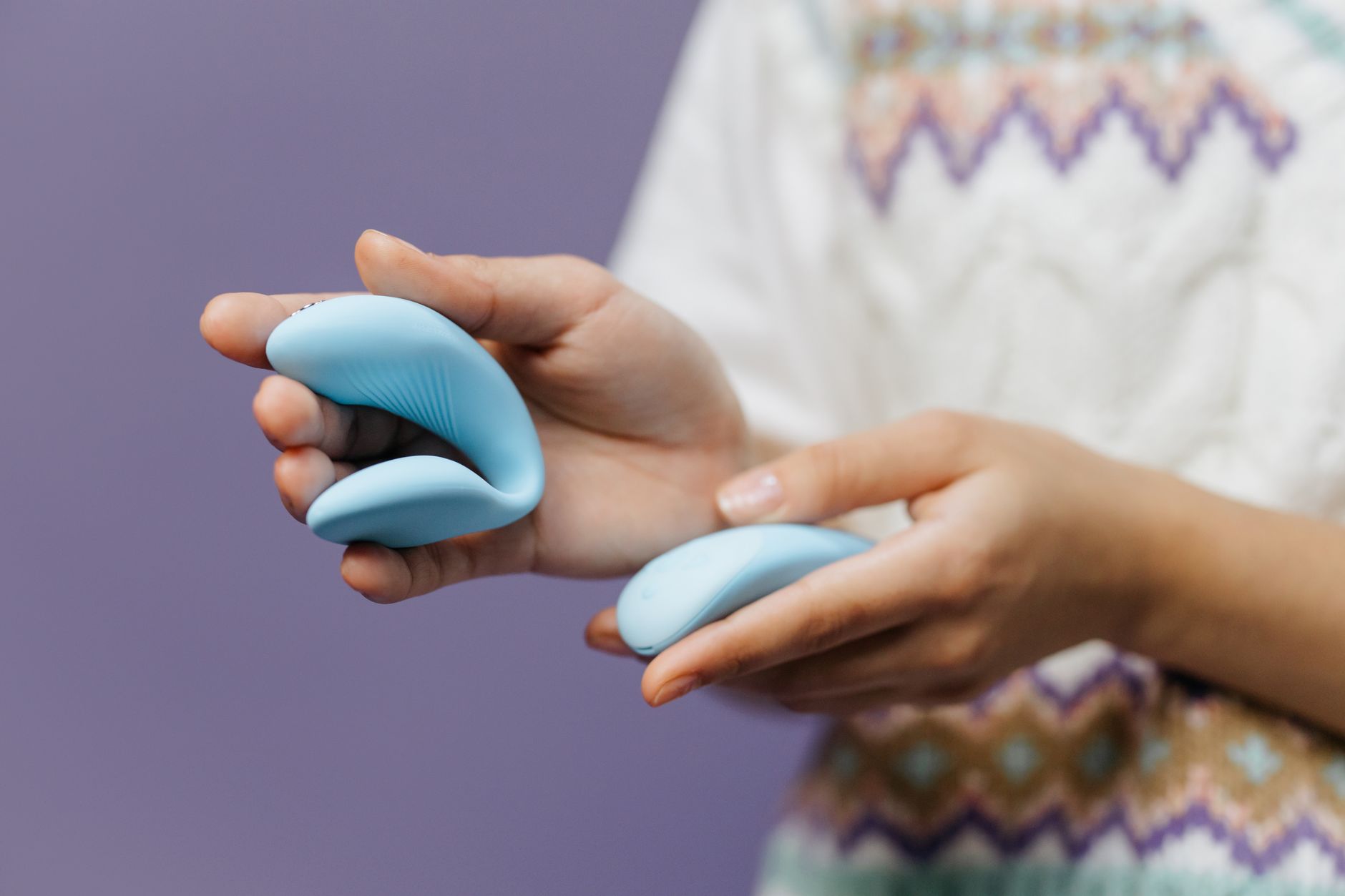
Lemon Intimate Toy's clitoral vibrators use a different stimulation pattern. The suction-based approach (often called air-pulse or gentle-suction technology) works by creating rhythmic pressure waves rather than direct vibration. This distributes sensation across a wider tissue area, reducing the intensity at any single point.
For postpartum bodies specifically: suction mimics the gentleness of oral sex without the unpredictability of a partner's tongue. You control pressure, you control pace, and you can start at the absolute lowest setting and work up only if and when your body asks for more. Most people find that this approach feels less like overstimulation and more like coaxing sensitivity back online.
A practical timeline for reconnection
Weeks two to four after delivery: no genital stimulation. Your body is still bleeding, contracting, and healing. Skip this phase. Seriously.
Weeks four to eight: gentle external exploration only. A warm bath, clean hands, and time. This is about noticing sensation again, not chasing orgasm. If you're curious about using a Lemon vibrator, week six onward is reasonable, but start with the lowest setting and only if it feels right. If it doesn't, that's also right.
Weeks eight to twelve: most people's sensitivity begins normalizing, though this varies wildly. Breastfeeding status, delivery type, and individual healing all shift the timeline. If you're bottle-feeding, estrogen rebounds faster, and tissue tends to recover quicker. If you're nursing, patience is your actual medicine here.
Three months onward: for many people, pleasure starts feeling familiar again. Not exactly like it did before (and that's okay), but less raw and more responsive. This is usually when partnered exploration feels less fraught.
How to actually use a Lemon vibrator in this phase
Start alone. That removes performance pressure and lets you focus on sensation without managing someone else's expectations in the room. You're doing research on your own body, not auditioning for a partner.
Use water-based lubricant, even if you have natural lubrication. Postpartum tissues are thinner and more prone to micro-tears. Lube is not optional. It's protective.
Begin at the absolute lowest setting. Lemon vibrators offer multi-level intensity, and honestly, you might live at level one for weeks. That's not a ceiling you're failing to reach. It's the right amount for healing tissue. Increase only when sensation starts feeling dull, not when you think you "should."
Focus on external stimulation only. The clitoris itself is sensitive. The surrounding skin around the vulva often feels safer to start. Many people find they can tolerate gentle suction on the mons pubis or inner labia long before direct clitoral contact feels okay. Lemon vibrators are small enough to give you that precision.
Stop immediately if pain appears. Tenderness is different from pain. Tenderness feels raw and uncomfortable but isn't sharp. Pain is sharp, burning, or concerning. If you hit pain, you've found your edge. Step back and wait.
Bringing your partner into this without making it awkward
Here's the thing about postpartum bodies: they need witnessing, not fixing. Your partner doesn't need to understand exactly why direct stimulation feels terrible right now. They need to hear "I'm not ready for that yet" without interpreting it as rejection.
The most useful conversation I've facilitated sounds like this: "My body is still healing. I'd like us to explore what feels good in the meantime, and that might look different than before. I'm using this time to figure out what my body wants now, not what it wanted six months ago."
That reframes the situation from "something is wrong" to "we're discovering something new together." It also buys you permission to take the time you actually need without guilt.
If your partner wants to be involved, there's room for that. Many people find it meaningful to have a partner present during solo exploration, without pressure to participate. That shared vulnerability can rebuild intimacy while you're healing.
When to check in with a medical provider
If tenderness hasn't improved by three months postpartum, talk to your OB or a pelvic floor specialist. This could indicate pelvic floor dysfunction, unresolved tearing, or scar tissue that's worth addressing.
If pain increases or appears suddenly weeks into recovery, that's also worth investigating. Sometimes complications show up slowly.
If you're breastfeeding and clitoral tenderness persists despite hormonal recovery, a low-dose estrogen cream (yes, even while nursing, with proper medical guidance) can help regenerate tissue. This is not a sign you're broken. It's just another tool in the toolkit.
The bigger picture: your pleasure matters, on your timeline
Postpartum recovery sells itself as a physical bouncing-back process. Six weeks, clearance, resume normal life. But sexual recovery is emotional, neurological, and sometimes hormonally stubborn. It does not follow a medical checklist.
Using a Lemon vibrator during this phase is not about rushing back to how things were. It's about gentle reconnection on your own terms, with a tool designed for sensitivity, at a pace your healing body actually supports. That might take weeks. It might take months. Both are completely normal.
Your pleasure matters. Not eventually. Not once you're "back to normal." Right now, in whatever form it takes, at whatever pace your body permits. That's the timeline that actually matters.
Common questions about postpartum clitoral sensitivity
Will my clitoris feel normal again?
Yes, almost always. Most people report full sensitivity restoration between three and six months postpartum, depending on delivery type and individual healing. Some describe their clitoris feeling even more responsive after recovery than it did before pregnancy. Patience is genuinely the primary treatment here.
Is it safe to use a vibrator if I'm breastfeeding?
Completely safe. The vibrator stays external and doesn't affect milk supply or hormone levels. The main consideration is your own comfort and readiness, not the vibrator itself or breastfeeding status.
Can I use a Lemon vibrator immediately after the six-week clearance?
You can, but you don't have to. Medical clearance is permission, not an instruction. Many people benefit from waiting until around week eight when sensitivity has normalized somewhat. Others feel ready at six weeks. Listen to your body's actual signals, not the calendar.
What if my partner wants sex but I'm not ready for clitoral stimulation yet?
Partner sex and solo pleasure are different conversations. You might find partnered sex (focused on penetration, for example) feels okay while direct clitoral touch still feels raw. You can also pause partnered sex entirely while you reconnect with your own body. This is not rejection. It's honoring your own healing.
Does postpartum clitoral tenderness mean something went wrong during delivery?
Not necessarily. Even straightforward deliveries cause tissue inflammation and nerve compression. Tenderness is an expected part of healing, not a sign of damage. That said, if it's accompanied by other concerning symptoms, mention it to your provider.
Can I explore pleasure with a partner present while I use a Lemon vibrator?
Yes. Some people find that having a partner present, without expectation of reciprocation or penetration, rebuilds intimacy while they're healing. The key is clear communication: "I want you here, but I need this to be about my body right now." That vulnerability often deepens connection.