
How to Use Lemon Vibrators When Lubrication Feels Insufficient or Uncomfortable
The dryness problem nobody talks about honestly
Let's be real. You've probably been told that lubrication is non-negotiable, that without it everything feels rough or uncomfortable. And then you either can't find lube when you want it, or the kind you try feels wrong—too thick, too thin, staining your underwear or making everything feel slippery and detached. The unspoken message is that your body isn't cooperating. That's the part I want to challenge.
With Lemon Intimate Toy's clitoral vibrators, the lubrication equation shifts entirely. The way these lemon sexual toys work—through suction and gentle pulse rather than abrasive friction—means you have real options when dryness shows up. You don't have to choose between discomfort and giving up.
How suction changes what lubrication actually does
Most vibrators work through direct contact and movement against tissue. That creates friction. Friction needs lubrication to feel good, or at least tolerable. Miss the lube and things get uncomfortable fast.
Lemon vibrators work differently. They use a suction mechanism that creates a seal around the clitoral area and then releases and reapplies that pressure in gentle waves. The movement isn't horizontal; it's vertical. There's contact, yes, but the primary mechanism is the changing pressure inside that seal, not the vibrator sliding across skin.
This distinction matters enormously. Suction-based lemon clitoral vibrators can work effectively with zero external lubrication because the mechanism doesn't depend on gliding friction. If you want to use lube, it enhances sensation and makes everything feel more luxurious. If you don't, it's not a requirement.
When you actually need lubrication
Here's the honest breakdown.
You need lube if the suction seal itself feels uncomfortable against your skin—usually because you're very dry and the seal creates a sensation of pull without any glide. Think of it like a suction cup on bare skin versus one with a thin film of moisture between. The moisture doesn't change what the cup does; it changes how it feels.
You also need lube if you want to use lemon sexual toys inside the vagina (not just external stimulation). Internal tissue is typically more delicate and responds better to lubrication even with suction-based tools.
You probably don't need lube if: your tissue has any baseline moisture, you're building arousal over 10 minutes or more (because arousal increases natural lubrication), or you're simply using the vibrator externally for short sessions.
Lube consistency matters more than amount
Water-based lubricants are the standard recommendation for every toy, and that's still true. But not all water-based lubes feel the same.
Thick lubes—the kind that feel almost gel-like—work best with lemon clitoral vibrators. Products with higher glycerin concentrations or added silica create a more substantial barrier between skin and the suction head. You use less of it, and it stays put. A thin, runny lube slides around, requires constant reapplication, and doesn't actually solve the problem of a seal feeling uncomfortable.
Look for water-based lubes marketed as "thick" or "premium." If the bottle is clear and the lube looks thin enough to pour, it probably won't give you what you need. The thicker stuff often costs more per milliliter, but you use so little that a bottle lasts months.
Silicone-based lubricants feel incredible and last longer, but they can degrade silicone toys over time. Since lemon vibrators are silicone, stick with water-based.
A practical guide to application
Here's the move that actually works. Warm the lube slightly—just run the bottle under warm water for 20 seconds—and then apply a small amount (roughly the size of a pea) directly to the suction head of your Lemon vibrator. Don't apply it to your body first. Apply it to the toy.
Why? Because you want that lube to sit between the suction head and your skin, creating that gliding layer. If you apply it to your body first, it spreads out, diffuses, and doesn't concentrate where it matters.
Turn the vibrator on at a low pattern before making contact. Let it build that suction gradually rather than creating a sudden seal. The warm lube plus gradual seal-building means maximum comfort and sensation.
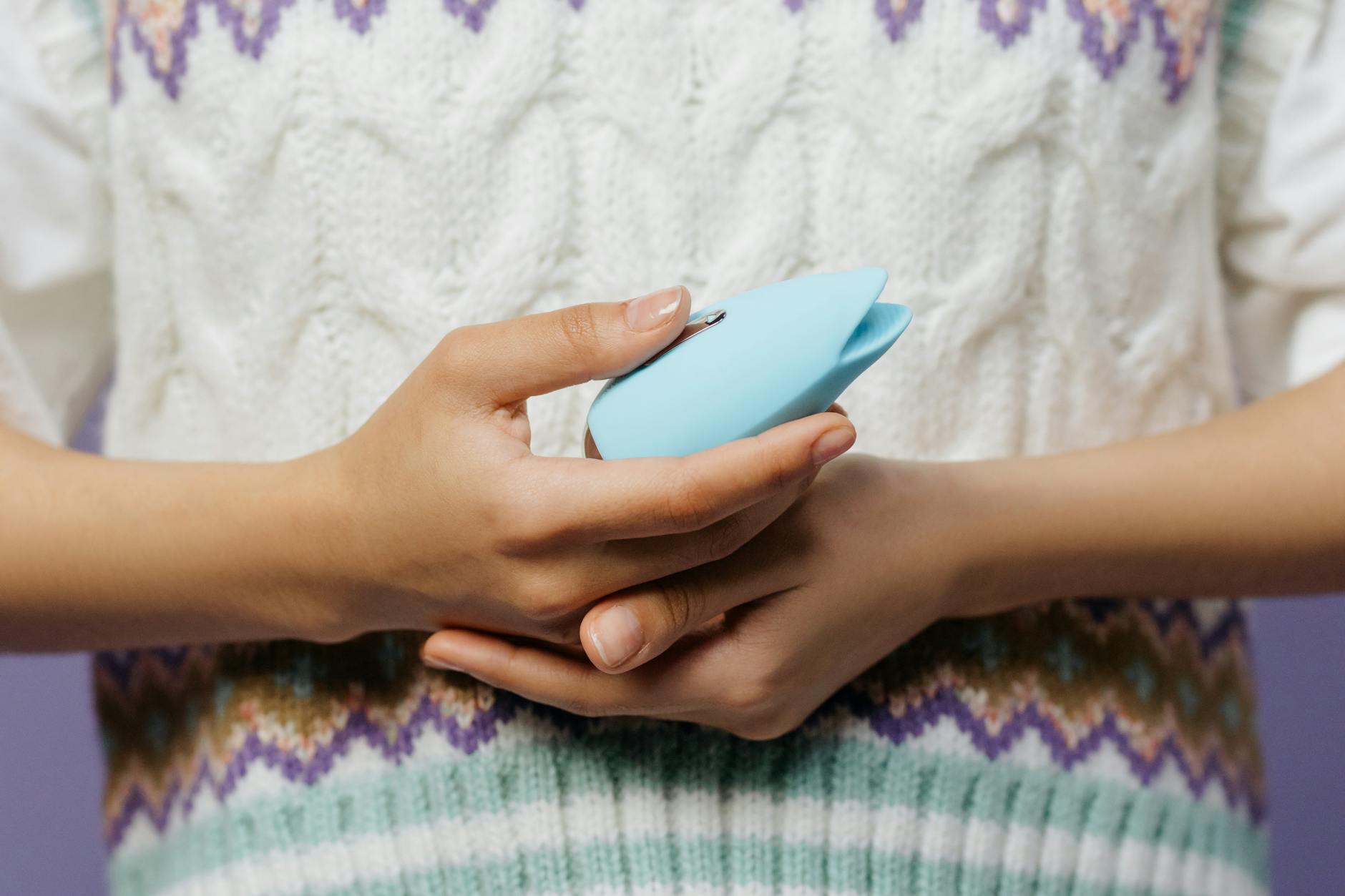
Photo by cottonbro studio on Pexels
What to do when dryness is persistent
If you're dealing with ongoing dryness—whether from hormonal changes, medication, stress, or other factors—that's worth addressing separately. Lemon clitoral vibrators are a tool that works around it, not a solution to the underlying issue.
Consider a vaginal moisturizer (not lubricant—these are different products used daily, not just during sex). Hyalo Gyn and Hyalogic are the branded options most clinicians recommend. These hydrate tissue over time rather than just temporarily slicking things up.
Hydration matters too. Dehydration shows up as dryness everywhere, including down there. If you're not drinking enough water or you're consuming a lot of caffeine and alcohol, that's worth correcting first.
Stress tanking your arousal and natural lubrication? That's real and common. Lemon vibrators help when stress kills arousal and desire, but addressing the stress itself—through sleep, movement, or talking to someone—makes everything easier.
The texture question: external versus internal
External clitoral stimulation (what lemon sexual toys excel at) works beautifully with or without additional lubrication. Internal use is different. If you want to use your vibrator partially or fully inside the vagina, lube becomes more important because internal tissue is thinner and more sensitive.
Start with a small amount of thick water-based lube if you're using the vibrator internally. Test it at low intensity first. Your body will tell you if you need more or if you're good.
Some people with vaginismus or pelvic floor tension find that external clitoral stimulation with a Lemon vibrator actually helps them relax tension enough to eventually use toys internally. Start externally, build comfort and arousal, then explore if you want to.
When to add lube mid-session
Your body changes as arousal builds. Natural lubrication increases. A seal that felt uncomfortable at the start might feel perfect after 15 minutes. You might start with a tiny bit of lube and find you don't need to reapply.
Conversely, if you're having a longer session and things feel less comfortable, a touch more lube is the move. Keep it nearby. A small water-based lube bottle fits in most nightstands or under pillows.
This is also why rushing into things doesn't help. When you give yourself time to warm up, your body often solves the lubrication question for you.
Lube quality and your comfort
Not all water-based lubes are created equal. Some contain parabens or other preservatives that irritate sensitive tissue. Others have sugars that feed yeast infections. If a particular lube makes you uncomfortable, itchy, or causes irritation, that's a sign to switch brands.
Free & Clear and Sliquid are reliable brands without irritating additives. They cost a bit more but actually last longer because you're not reapplying constantly. Your tissues are worth the investment.
FAQ: Lubrication and Lemon vibrators
Can I use Lemon vibrators with no lubrication at all?
Yes, absolutely. The suction mechanism means you can use lemon clitoral vibrators without any additional lube if your natural moisture is adequate. Start at a low pattern and see how it feels. If there's any discomfort, add lube. But for many people, external clitoral stimulation with a lem vibrator requires zero additional lubrication.
What if store-bought lube irritates my skin?
First, make sure you're using actual lubricant, not a sensate gel or flavored product—those often have irritants. Second, try a different brand with fewer additives. If you're sensitive to water-based lube overall, silicone-based is out (because of the toy material), but you could experiment with oil-based lubes if your partner's status allows it. Coconut oil and jojoba oil work in a pinch, though they're not formulated for intimate use.
How much lube should I actually use?
Less than you think. A pea-sized amount on the suction head is genuinely enough. More lube doesn't equal more sensation—it can actually dull it because you're adding layers between the mechanism and your tissue. Start with a tiny amount and add more only if you need it.
Does heating lube actually make a difference?
Yes, genuinely. Warm lube feels better than cold lube, spreads more easily, and creates a more consistent sensation. It takes 20 seconds to warm a bottle under running water. Worth it.
Can I use saliva as lubricant?
Technically yes for very brief external use, but it dries out fast and requires constant reapplication. It's also less hygienic if multiple people are involved. Water-based lube is cheap, reliable, and designed for the job. Use that instead.
What if I'm using lube but still feel discomfort?
Stop and check three things: the intensity level (too high?), the duration (too long without a break?), and your arousal level (genuinely turned on, or just going through motions?). Discomfort often signals that something else in the experience needs adjustment, not that the tool is wrong. If discomfort persists even at low intensity with good lube and genuine arousal, talk to a pelvic floor specialist or gynecologist. Persistent pain is always worth investigating.
The bottom line
Lubrication is a tool, not a requirement. With lemon vibrators, you have real flexibility. Some sessions you'll use lube. Others you won't need it. As your body changes—with hormones, stress, medication, or simply age—the equation might shift. That's not broken. That's just how bodies work.
The suction-based design of Lemon Intimate Toy's clitoral vibrators means you're not stuck choosing between discomfort and giving up on pleasure. There's a third option: using the tool in a way that actually works for your body right now. Start there, adjust as needed, and keep exploring.