
Let's be real: intensity doesn't split evenly
You want deep, buzzing sensation that builds fast. Your partner finds that same setting harsh, almost numb-inducing after a few seconds. One of you reaches for maximum frequency right away. The other needs to start at pattern one and climb gradually, if they climb at all. This isn't a flaw in either of you. It's just how nervous systems work.
Most couples treat intensity mismatch as a problem to solve with compromise. Someone gets a weaker experience. Someone feels impatient. Neither of you is actually satisfied. But there's a better frame: intensity mismatch is information. It tells you something real about how each partner's body responds, and once you have that information, you can design an experience that works for both of you.
Lemon clitoral vibrators, with their range of intensity levels and distinct sensation patterns, make this negotiation way less awkward than trying to manage it with a single device.
Why intensity preferences diverge
Four main reasons intensity doesn't match up, and none of them mean you're incompatible.
Nerve density varies wildly. Some people have denser clitoral nerve endings, which means lighter sensation registers as plenty. Others have sparser nerve density and need more amplitude to create the same sensation chain reaction. This is genetic, not a reflection of desire or capacity.
Sensitivity changes month to month. Hormonal shifts, stress, caffeine, how rested you are, whether you're on your period. All of it modulates sensitivity. The intensity that felt right last week might feel too much this week. Your partner might be consistent while you're all over the map.
Numbness and oversaturation work differently for different bodies. Some people hit numbness fast with high intensity. The nerve endings desensitize and the sensation flatlines. Others can sustain high intensity without that drop-off. For some, adding intensity brings numbness. For others, it brings deeper pleasure.
Arousal readiness is rarely synchronized. You might be fully aroused and ready for maximum stimulus. Your partner is still warming up. Introducing high intensity when their body isn't yet ready creates discomfort, not pleasure.
The conversation before you try anything
Here's what I ask couples to discuss before introducing a Lemon vibrator into partnered play: What does intensity actually feel like for you? Not "I like it strong" or "I prefer gentle." But what's the actual sensation. Does high intensity feel overwhelming. Does it numb you. Does it make you want to pull away. Does it feel great for two minutes then turn unpleasant.
Your partner answers the same questions from their side. Suddenly you're not arguing about whose preference is right. You're solving two different sensation puzzles.
Then ask: What does the intensity need to accomplish for you. Some people use intensity to build orgasm faster. Some use lower intensity for longer, connected sensation. Some people bounce between patterns mid-session. Some need consistency. This is where the real divergence often lives, and it's fixable.
Why Lemon vibrators actually solve this
The design matters here. Lemon clitoral vibrators have distinct intensity patterns and graduated frequency ranges. That's not a luxury feature. That's the solution to your problem.
Instead of one device that's either "on" or "off," you have access to patterns one through seven, and within each pattern, a frequency range you can adjust. One partner stays on pattern three, frequency two. The other explores patterns five and six, higher frequencies. Same device. Two completely different experiences.
Pattern variability is key. Pattern one on a Lemon vibrator feels entirely different from pattern three, even at the same frequency. One might feel like gentle pulsing. Another might feel like waves. A third might be rapid micro-bursts. When one partner finds the intensity overwhelming at high frequencies, they often find relief by switching patterns entirely rather than turning the device off. They're still in the experience. Just with different stimulation.
Frequency control separates sensation from intimacy. You can use a lemon clitoral vibrator with your partner at low frequency while they're using it at high frequency. Neither of you is waiting for the other. Neither of you is settling. You're both getting your actual preference in real time.
The choreography that works
Think of partnered play with intensity mismatch as a dance with two different tempos. It helps to plan the rhythm.
Warm-up together at a middle-ground intensity. Start at pattern two or three, frequency two. This is low enough that the person who gets overwhelmed easily isn't already at their ceiling. It's high enough that the person who needs more stimulation isn't bored. You're both arousing together, building momentum at the same pace.
Then each person adjusts independently. Once you're both aroused and connected, the person who can sustain higher intensity turns their frequency up. The other person either stays put, drops down to a gentler pattern, or switches patterns entirely. You're no longer trying to find one sweet spot. Each of you is tracking your own pleasure.
Check in with your partner about what they're experiencing, not just what they're doing. "Feels good" is information, but "feels good and I could keep going" is different from "feels good but I'm at my ceiling." Knowing where your partner is in their sensation range helps you stay coordinated emotionally even when you're using different frequencies.
Build variety into the session. If one of you uses high intensity the whole time and the other uses low intensity the whole time, you're basically having two separate experiences that happen to occur in the same room. Instead, try phases. Five minutes of matched intensity. Two minutes of mismatched. Back to matched. This keeps both partners feeling like they're in the same experience.
When one person needs to go slower
If your partner finds that standard intensity settings feel too much, don't immediately conclude they need a less powerful device. Often the issue isn't power. It's pacing or pattern.
Lower frequency at a gentler pattern might feel exactly right. They get to experience the same device, the same technology, just calibrated differently. They're not using a "training" toy. They're using the actual device at a setting that matches their nervous system.
If even the lowest frequency feels intense, water-based lubricant becomes your partner tool. It changes how the sensation transmits. Sometimes the difference between "too much" and "perfect" is literally one drop of lube creating a tiny cushion between the device and sensitive tissue.
When one person wants to go harder
If you're the person who wants more intensity, the temptation is to crank the Lemon vibrator to maximum and ignore your partner's discomfort. Resist that. You get more pleasure when your partner is actually present and enjoying themselves, not white-knuckling through it.
Instead, use the mismatched intensity as permission to go solo with what you need. Use the Lemon clitoral vibrator at your preferred intensity and pattern while your partner uses it at theirs, or while they use touch or a different kind of stimulation. You're both satisfied. The session actually works.
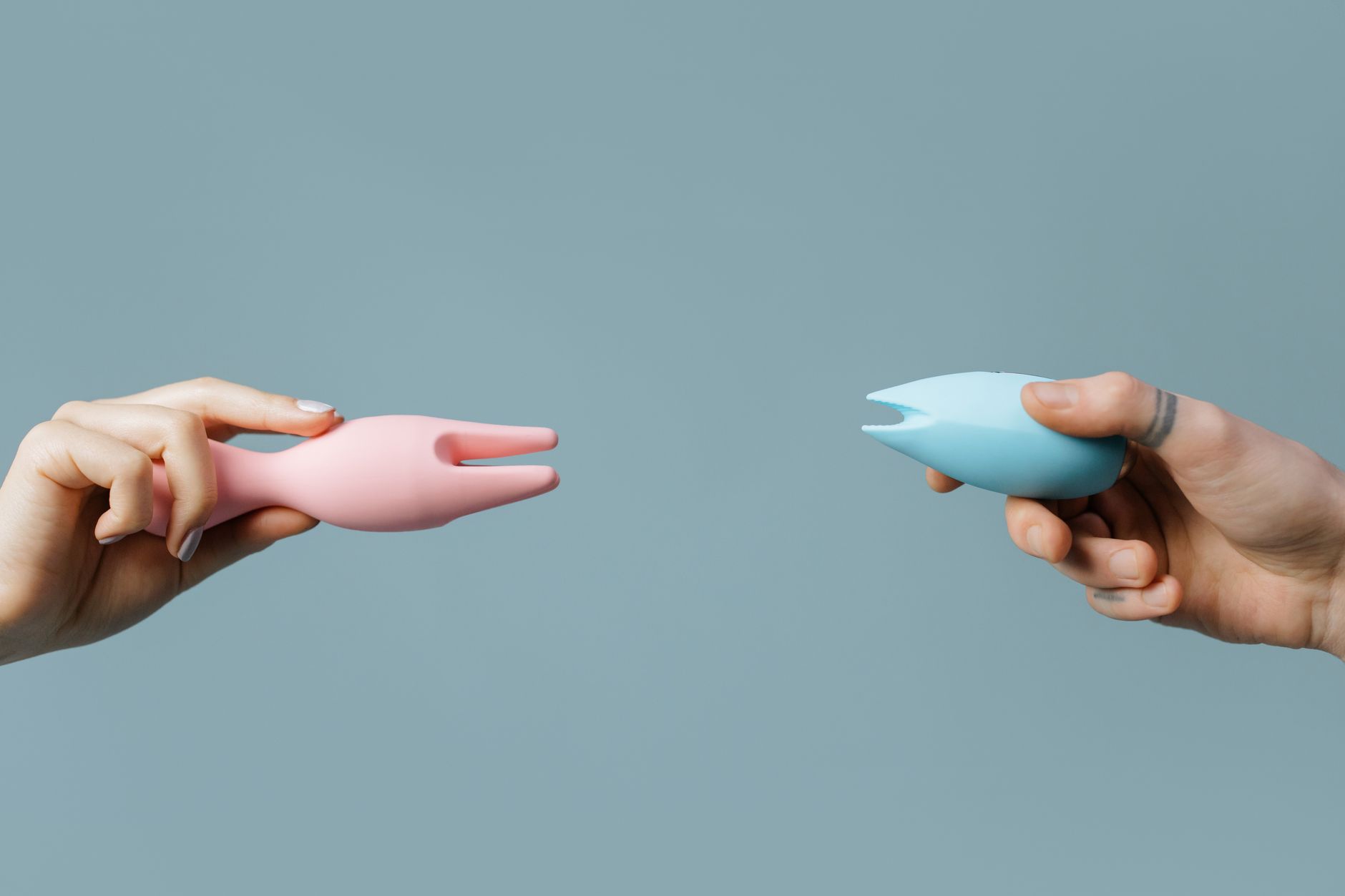
Photo by cottonbro studio on Pexels
The biggest mistake couples make
They interpret intensity mismatch as a reflection of desire. "If you really wanted me, you'd enjoy the intensity I enjoy." That's not how bodies work. Intensity preference is neurological, not emotional. Separating those two conversations transforms everything.
Some of the most connected couples I work with have wildly different intensity preferences. They've just learned to see it as information rather than rejection. Your partner isn't rejecting you by needing gentler stimulation. They're telling you something useful about how to give them actual pleasure rather than discomfort dressed up as performance.
Rebuilding coordination after intensity mismatches
If you've spent time trying to force your preferences to match and it created resentment, one of you might now approach partnered play with hesitation. The person who felt oversaturated might tense up expecting to be overwhelmed again. The person who felt frustrated might approach with impatience.
Reset the experience by going slower than either of you would alone. Start with a Lemon vibrator at the gentler partner's preferred intensity and pattern. Let the more intense-seeking partner experience what that actually feels like. Usually there's pleasure there they hadn't noticed because they were too focused on "not enough." Then swap. The gentler partner experiences what their partner loves about higher intensity.
Often couples find that intensity preferences are less about "more is better" and more about "this is what feels connected to me right now." Once you understand that distinction, supporting your partner's preference becomes straightforward instead of threatening.
FAQ: Intensity mismatch and partnered play
Can we use the same Lemon vibrator and just take turns adjusting the intensity?
Absolutely. But it requires a rhythm where one person isn't just waiting passively while the other person adjusts and explores. Try alternating who drives the intensity. Two minutes at pattern one, then switch and go to pattern five. You're both getting moments where the device is calibrated for you specifically. It feels more connected than if one person is always adjusting for the other.
What if the intensity mismatch makes my partner feel broken?
That's a sign the conversation needs to shift from "your body is wrong" to "your nervous system has different thresholds." I often recommend couples read about nerve density variation and sensory processing diversity together. Knowing that intensity preference is completely normal and varies across the population usually helps the person with lower threshold intensity feel less defective and more seen. The Lemon clitoral vibrator becomes a tool that respects that difference rather than a reminder of incompatibility.
Is it better to have two separate devices or use one Lemon vibrator and share?
It depends on your dynamic. Some couples find that each person having their own device reduces negotiation entirely. You're not coordinating around a single vibrator. You're each exploring your own preferences. Other couples find that sharing one Lemon vibrator keeps them more connected because it requires communication and compromise about intensity and pattern. Neither is wrong. Pay attention to what feels more intimate to you both.
Can intensity preferences change during a session?
Yes, constantly. You might start wanting high intensity and after five minutes find that medium feels better. Your partner might warm up into higher intensity they didn't want initially. Checking in during the session, not just at the start, helps both of you stay responsive to what's actually happening instead of sticking to an initial plan that no longer works.
What if my partner's intensity preference makes it hard for me to climax?
That's a sign you need separate tools or phases. Your orgasm is important. Your partner's comfort is important. Both are valid. Try alternating focus. Five minutes where the session is designed around your arousal curve and preference. Five minutes where it's designed around theirs. Or use separate Lemon vibrators calibrated to each person's needs. You'll both climax better when neither of you is compromising your actual pleasure to meet someone else's.
How do I ask my partner to turn the intensity down without them feeling rejected?
Be specific about sensation, not judgment. Instead of "That's too much," try "Feels overwhelming at that frequency. Could you drop it to pattern two." You're describing what your nervous system needs, not criticizing their preference. It's the difference between "your pleasure is wrong" and "I need something different." Most partners respond well to information that helps them actually pleasure you rather than just trying harder at what isn't working.
The real solution
Intensity mismatch stops being a problem when you stop treating it as a problem. It's just information about how your bodies are wired. A Lemon clitoral vibrator with its range of patterns and frequencies is built specifically to let two people access that information together without either person sacrificing actual pleasure.
Most couples never discuss intensity this directly because there's no good framework for it. You've got that framework now. Use it. Talk to your partner about what intensity actually does for them. Listen without defending your own preference. Then pick a device that lets both of you explore simultaneously instead of taking turns.
That's when partnered pleasure actually works.
If you're still navigating how to talk about intensity mismatches or other pleasure disconnects with your partner, reach out. Sometimes couples need a space to have these conversations outside the bedroom.