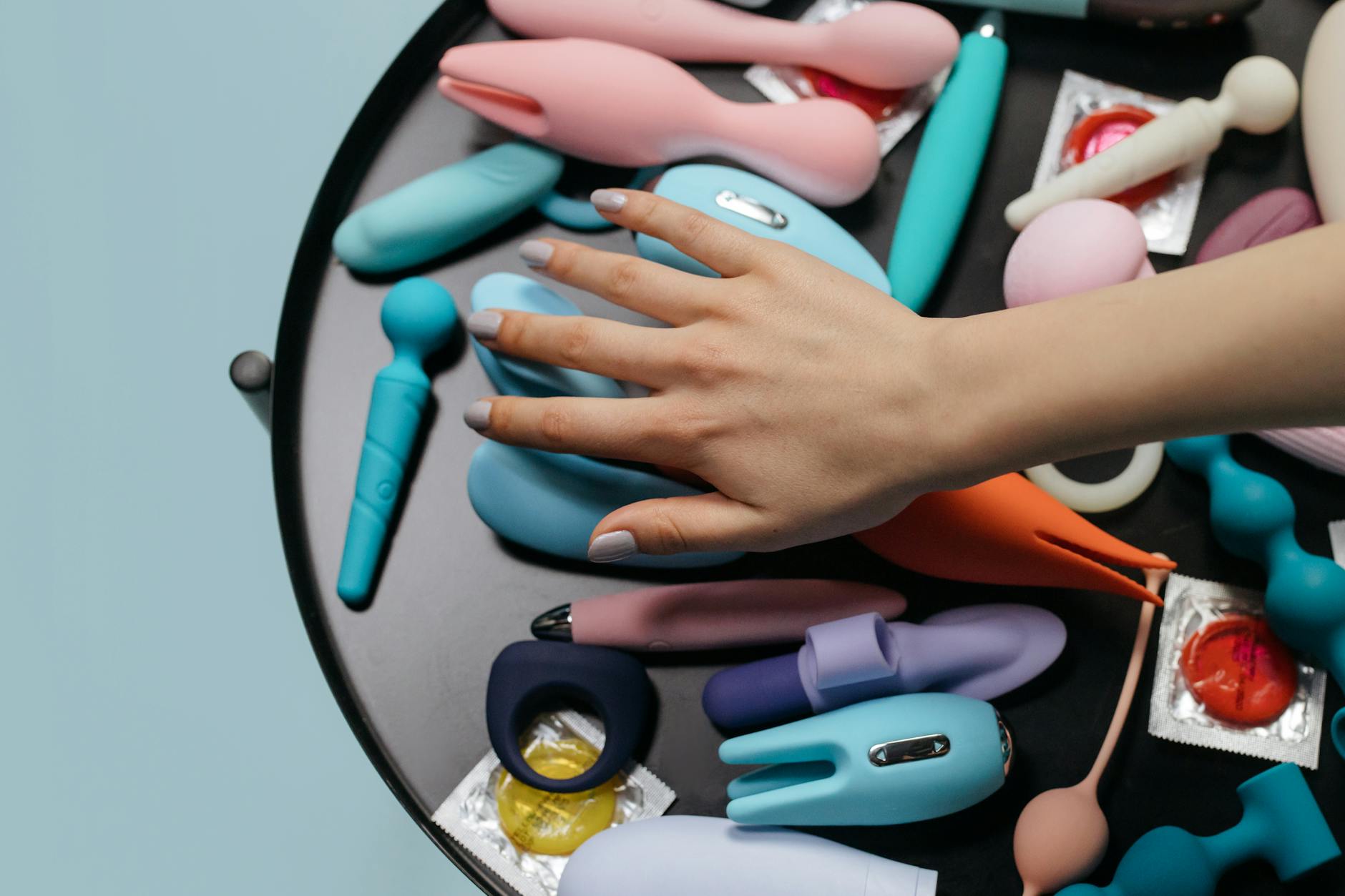
Let's name the thing that's actually happening
You didn't suddenly stop wanting pleasure when you turned 50. What happened is that the cultural permission to have it got quieter. Somewhere in your thirties or forties, the world's interest in your sexuality started to fade. And you internalized that fade as a fact about yourself instead of what it actually is: a fact about how we've been taught to think about aging bodies.
I see this in my therapy practice constantly. Women in their fifties who've had good sex lives suddenly feel self-conscious. Men who've been confident for decades start second-guessing themselves. Not because anything is wrong with their bodies or their desire. But because there's this underlying whisper that goes: this isn't for you anymore.
That whisper is the problem. Not your age, not your body, not your interest in pleasure.
The guilt belongs to a system, not to you
Here's what research keeps showing me: people over 50 who are having regular sex and using tools like lemon clitoral vibrators report higher satisfaction, more consistent orgasms, and better relationship intimacy than their younger counterparts. The difference isn't biology. It's permission.
Younger people have youth culture telling them sexuality is normal (whether they believe it or not). People over 50 don't get that messaging. Instead, we get silence, or worse, we get the message that our sexuality is something to manage or hide.
When you pick up a lemon vibrator in your fifties, you're not being desperate or clinging to youth. You're deciding that your pleasure matters as much as anyone else's. That's not awkward. That's integrity.
Why the awkwardness feels so real (even though it's not about the toy)
There are a few places where this shows up:
Buying the thing. Even online, there's a voice that says this isn't for you. That you're too old, that it's silly, that real adults don't. That voice isn't coming from your body. It's coming from decades of receiving the message that female sexuality (or sexuality in general, if you're not a woman) has an expiration date.
Using it alone. There's guilt that can show up if you're partnered. A feeling that needing more stimulation, or different stimulation, or solo time means something is wrong with the relationship. It doesn't. It means you're human. Your pleasure is separate from your partnership. Both can be true at once.
Enjoying it more than you expected. This one surprises people. When pleasure actually arrives after years of thinking it might be gone for good, there's relief but also sometimes shame. Like you're not supposed to enjoy this much. You absolutely are.
The actual conversation you need to have (if you're partnered)
If you're in a relationship and you're thinking about bringing lemon vibrators into your life, the conversation isn't "I need this because something is wrong." The conversation is "I want to explore what feels good to me right now. Will you come along?"
That's different. One frames it as a problem. The other frames it as an adventure.
Some partners will immediately be interested. Some will need time to shift their thinking. Some will worry it means something about them. If they do, that's worth exploring together. But your pleasure isn't dependent on their instant comfort. You can move at a pace that works for you while also being patient with them.
Many couples I work with find that when one partner stops apologizing for their sexuality, it actually opens up the whole dynamic. Permission becomes mutual.
The physical part (which is easier than you think)
When you're starting with a lemon clitoral vibrator in your fifties, here's what usually works:
Start low. Most lemon vibrators have multiple intensity settings. You don't need to chase the strongest sensation. You need to find the sensation that actually feels good to you right now. That might be setting two. That might be setting four. There's no wrong answer.
Time matters more than you think. If arousal takes longer to build these days, budget for it. Give yourself 15 to 20 minutes of warm-up before you introduce the toy. Your body isn't broken. It just has a different rhythm.
Lubrication is your friend, not a sign of failure. Whether you're naturally lubricated or not, adding a water-based lube makes almost every experience better. It's not about fixing anything. It's about comfort. That's it.
Explore solo first. You don't owe it to anyone to use a toy the way you're "supposed to." If using a lemon vibrator alone feels good, that's where to start. You can invite a partner in later if you want to. Or not. Both are fine.
The emotional reset that actually matters
Somewhere in your twenties or thirties, you probably had some version of permission to explore your body. Maybe you owned that permission fully. Maybe you didn't. But it was culturally available.
What happens in your fifties is you get to choose whether to reclaim that permission for yourself. Not because you're trying to stay young. But because your pleasure is still you. It's still valid. It's still worth your time.
This is actually the easiest conversation with yourself you can have. Your body hasn't stopped knowing what it likes. You've just been told not to ask. So ask.
Handling the vulnerability (with yourself and with a partner)
Using a toy, especially after a long time away from this kind of self-care, can feel vulnerable. That's normal. You're reclaiming something. That has weight.
If you're doing this solo, the vulnerability is just between you and yourself. That's actually the gentlest place to start. You don't have to explain yourself. You don't have to perform. You just get to feel.
If you're with a partner, vulnerability has a different shape. You're essentially saying, "Here's what I want. Here's what my body needs. I'm trusting you with that." That's brave. If your partner responds with curiosity instead of defensiveness, you've found something. If they respond with defensiveness, that's worth talking about. Not in the moment, but later, when you're both grounded.
Many couples find that this kind of honesty about pleasure ends up being a doorway to honesty about other things. Not always. But often enough that it's worth naming as a possibility.
The timeline is yours, not anyone else's
You might start using a lemon vibrator and immediately love it. You might start and feel weird for the first few times, then come around. You might try it once and decide it's not for you. All of those are correct answers.
The point isn't to use the toy. The point is to know that you're allowed to want pleasure, to explore what feels good, and to change your mind about what that looks like. That permission is available to you right now, at whatever age you are.
Your fifties aren't your last chance at pleasure. They're actually often the first real chance some people get, because the stakes feel lower and the self-knowledge is higher. You know your body. You know what you want. You're not trying to prove anything.
That's an advantage, not a disadvantage.
Common questions about pleasure after 50
Is it normal to want more stimulation now than I did in my thirties?
Completely normal. Tissue changes, hormone shifts, and simple age-related shifts in sensitivity all mean that what worked at 35 might not work at 55. Your body isn't broken. It's evolved. A tool like a lemon clitoral vibrator isn't a sign of decline. It's an adjustment to where you actually are.
What if my partner thinks I'm being unfaithful if I want to use a toy?
That's worth a direct conversation. Using a toy isn't about cheating. It's about your body and your pleasure. You can frame it clearly: "This is about what feels good to me physically. It has nothing to do with you or how I feel about you." If they continue to frame it as unfaithful after that, that's a bigger relationship issue that might benefit from couples counseling.
How do I tell my partner I want to try this without embarrassing myself?
You could start small. "I've been thinking about trying some things that might help me enjoy sex more. Would you be open to exploring that together?" You don't have to have all the details figured out. You're just opening a door. If they say yes, you can talk specifics. If they say no, that's information too.
Should I use it alone first, or jump straight to using it with my partner?
Alone first is almost always easier. You get to figure out what you like without an audience. You get comfortable with the toy. Then, if you want to bring a partner in, you're coming from a place of knowing what you enjoy, not from a place of nervousness. That shifts the whole dynamic.
Is there a right way to use a lemon vibrator at my age?
There's only your way. Start with lower intensity settings. Experiment with different patterns. Notice what actually feels good versus what you think should feel good. Your body will tell you what works. Listen to it.
What if nothing feels good anymore and I'm worried I've lost the ability to enjoy pleasure?
That's usually not true. What's usually true is that you haven't found the right combination yet. Pleasure might need different conditions now. More time. Different intensity. Less pressure. A therapist or a doctor can help rule out physical issues, but often it's about creating the right conditions for your specific body right now. A tool like a lemon vibrator is one way to explore what those conditions might be.