
Let's name what's actually happening
You used to feel pleasure clearly. Now there's static in the signal. You touch yourself and there's sensation, sure, but no spark. No pull toward it. You're going through the motions, or maybe you're not even bothering anymore because it all feels like work. This isn't broken. This is disconnection, and it's one of the most common things I see in my practice.
Emotional disconnection from pleasure is different from the physiological changes we usually talk about. It's not about hormones or medications or anatomy. It's about your brain deciding, somewhere below conscious thought, that pleasure isn't safe, isn't worth your time, or isn't for you right now. And here's the thing: your body believes what your mind tells it.
Why disconnection happens more than you think
Three main routes lead here.
First, chronic stress rewires your nervous system. When you're in sustained fight-or-flight mode (work pressure, financial worry, family chaos), your body deprioritizes pleasure. Neurologically, arousal and deep relaxation live in the same part of your brain. You can't access one while the other is active. It's not weakness. It's neurobiology.
Second, relationship friction creates a distance that radiates inward. You might feel disconnected from your partner, which triggers a protective numbing around your own desire. Even if you're solo, past experiences with partners can lodge themselves as learned numbness. Your body remembers unsafety.
Third, what I call the "performance trap." You've spent years calibrating your pleasure response around someone else's timeline or expectations. You learned to fake it, to speed it up, to prioritize their experience. Over time, your own signals get quieter. You stop trusting what your body is actually telling you.
Why vibrators help when you're emotionally blocked
Here's what I tell clients: a vibrator isn't magic, but it's a reset button.
When pleasure has become a chore or a ghost of what it was, a consistent external stimulus does something your hand alone can't. It creates enough intensity to override the noise. It doesn't require you to perform. It doesn't care if you're anxious or distracted. It just keeps going, which means your brain eventually stops protecting you from the sensation.
Lemon vibrators specifically work well for reconnection because they're designed for clitoral stimulation, which is neurologically simpler than penetration. You're not managing multiple sensations or worrying about depth or position. You can lie down, close your eyes, and just receive.
The suction mechanism in Lemon vibrators is particularly useful here. Suction feels gentler than direct vibration when you're nervous, but it's powerful enough to break through numbness. It's like your body can trust it more easily.
Building back sensation: the three-phase approach
Phase one: The listening phase.
Start with your Lemon vibrator on the lowest setting. Not because low is "better," but because it gives your nervous system time to recognize what's happening. Put the vibrator somewhere close to the clitoris, but not directly on it. Your inner thigh. The side of your vulva. Your lower belly. Let the sensation travel around the area.
Your job here is zero. No goal, no orgasm target, no "this should feel better than it does." You're just observing. What does this feel like? Where does your attention naturally go? This phase might take three to five sessions before you notice anything shifting.
Phase two: The permission phase.
Once your nervous system stops holding so tight, move the vibrator closer. Direct contact with the clitoris. You might feel something right away. You might feel nothing for a while, then suddenly feel everything. Both are normal. The shift often comes around session five to ten, depending on how defended you are.
At this stage, let pleasure be smaller than you think it should be. A subtle warmth. A gentle tingle. These count. Your brain has been trained to dismiss pleasure that doesn't look like what you see in movies. Rebuild your language for what feels good. "That's interesting." "That's something." "That's there."
Phase three: The integration phase.
Once you can feel the vibrator clearly, the work shifts to trust. Can you stay with it? Can you let arousal build without pushing it? Can you accept that some days will feel electric and some days will feel like almost nothing, and both are okay?
This is where partnered pleasure sometimes starts to integrate too. If you have a partner, this phase is about bringing them into the experience without letting them take over the narrative. You're the expert on your own reconnection.
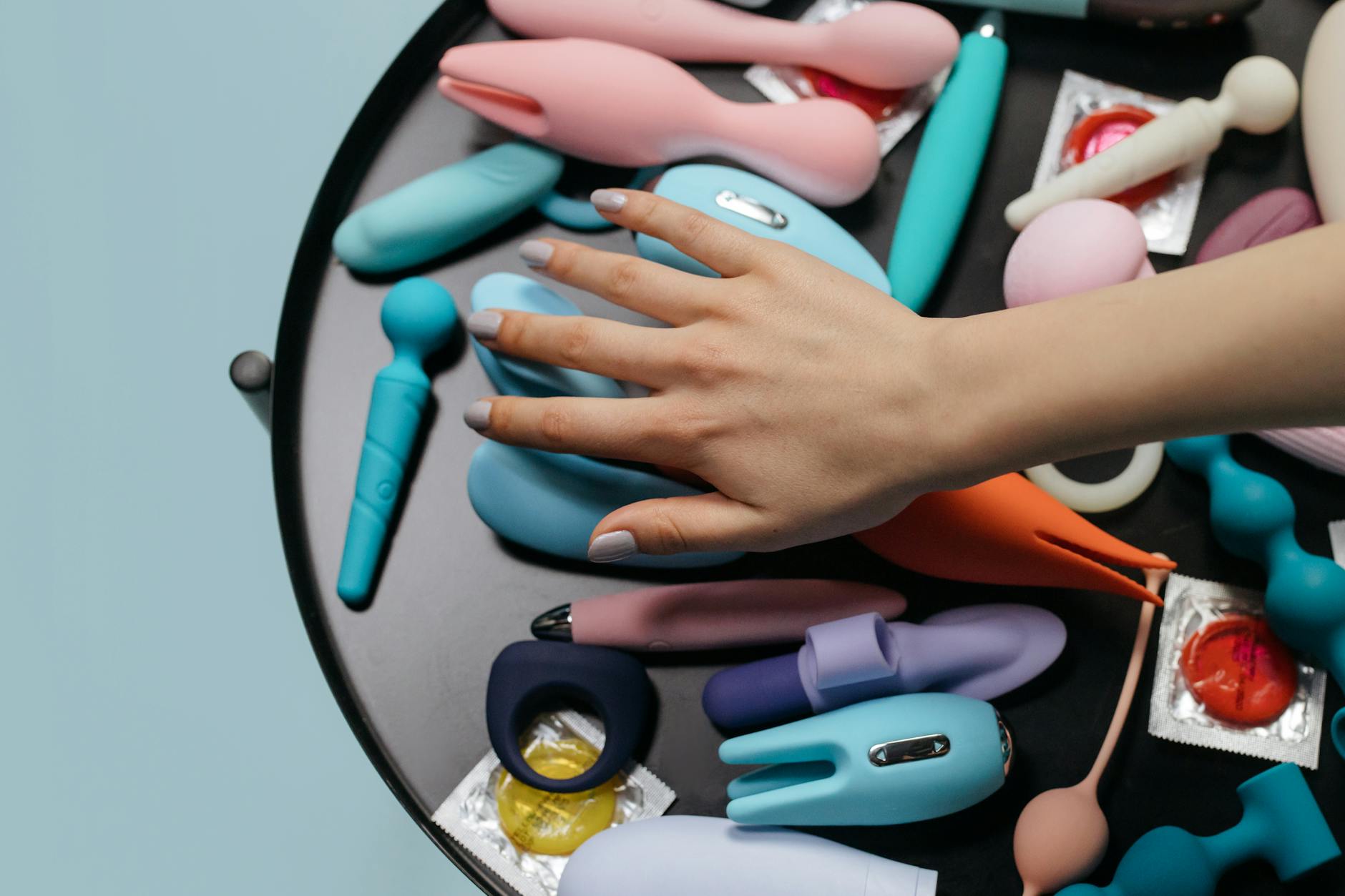
Photo by cottonbro studio on Pexels
The role of environment and timing
Emotional disconnection thrives in chaos. You can't rebuild something this tender while you're half-listening for texts or worried about being interrupted.
Set an actual boundary. Thirty minutes. Phone in another room. Headphones in if that helps your brain relax. Lighting that you choose. This isn't luxury. It's a necessary condition for your nervous system to shift gears. Your body has learned that pleasure isn't a priority. You're teaching it otherwise through consistency and protection.
Timing matters too. Most people report better results in the morning or early evening, when cortisol (stress hormone) is naturally lower. Not when you're wired on coffee or crashing after a brutal day. Your nervous system is already taxed.
What to actually expect, not what the movies show
This process doesn't always lead to screaming orgasms. That's not the point. The goal is sensation. The goal is knowing what your own pleasure feels like. The goal is rebuilding trust in your body.
Some people reconnect through big, clear orgasms. Others reconnect through gentle, sustained warmth. Some people find that their arousal looks completely different than it did before the disconnection. Faster, or slower, or more mental. That's not regression. That's growth.
Expect also that some sessions will feel like nothing. Your nervous system might still protect you sometimes. That's information, not failure. Note it. Stay consistent. The pattern usually breaks around week three to four of regular use.
When to bring a partner into this work
If you have one, don't invite them in immediately. Get three to four weeks of solo reconnection first. You need to know what your pleasure feels like without someone else in the equation. Then, show your partner what you've learned. Let them watch. Let them understand your timeline, not theirs.
Many couples find that one partner's reconnection work actually helps both of them. It removes pressure. It shows what slow, honest pleasure looks like. It gives permission for both people to be learning.
If your partner pushes to understand or "help" before you're ready, that's worth a conversation about boundaries. This phase is yours.
The conversation with yourself that matters most
Emotional disconnection often arrives with a belief: "Something is wrong with me." There isn't. Something is protecting you. Your body learned that pleasure wasn't safe or wasn't available. Reconnecting isn't about fixing a broken thing. It's about negotiating a truce with a part of yourself that's been doing its job very well.
When you pick up a Lemon vibrator for the first time with this framework in mind, you're not shopping for pleasure. You're extending an invitation. You're saying: I'm ready to feel again. I'm giving this time and space. I trust that the signal will come back.
Sometimes it takes weeks. Sometimes it takes months. But in my twenty-plus years of work with people rebuilding intimacy, I've never seen someone who stayed consistent with this approach fail to reconnect. Your pleasure didn't go anywhere. It was just waiting for you to create the conditions where it could exist.
People also ask
How long does it usually take to feel pleasure again after emotional disconnection?
Three to four weeks of consistent use is the point where most people report noticing a shift. But "noticing" might just mean a slight awareness of sensation, not full-blown arousal. Real reconnection, where pleasure feels integrated and trustworthy again, usually takes two to three months. Every person's timeline is different. What matters is showing up regularly, not hitting a deadline.
Can I use a Lemon vibrator if my partner doesn't know about it?
Yes. This reconnection work is yours to do alone first. If you're in a relationship and want to keep this private while you rebuild, that's completely legitimate. You're not hiding something from your partner in a way that harms the relationship. You're doing personal healing work. When you're ready, the conversation might naturally unfold. You don't owe anyone access to your pleasure journey before you understand it yourself.
What if I use the vibrator and still feel nothing?
First, check your settings. Are you on the lowest intensity? Second, check your environment. Is there any chance you're being interrupted or distracted? Third, check the timeline. Have you given yourself at least five to ten sessions? Your nervous system needs repetition to believe that this is safe. If you're past week three and still feeling nothing, and you know the setup is right, sometimes talking to a therapist helps identify what your body is protecting you from. Disconnection usually has a reason.
Is using a vibrator when you're disconnected the same as using one when you're already aroused?
Completely different. When you're already aroused, a vibrator accelerates what's already happening. When you're disconnected, it's creating the initial signal. It's gentler, slower, more about observation. You're not chasing an orgasm. You're rebuilding the ability to feel. The techniques are totally different.
Can disconnection from pleasure happen to people in good relationships?
Absolutely. Stress, medication changes, hormonal shifts, aging, or just the weight of modern life can create disconnection even in deeply connected partnerships. It's not about whether your relationship is good. It's about your nervous system being in a state where pleasure is deprioritized. The work to reconnect is still the same.
What should I do if reconnection work triggers old relationship trauma?
That's worth slowing down and potentially working with a therapist on. Your body might be trying to tell you something. A skilled therapist trained in somatic work (body-based therapy) can help you move through this carefully. You don't have to push through. You can pause, get support, and resume when you feel ready. Reconnection to pleasure isn't a race.
Your capacity for pleasure is still there. It's just waiting for you to create the conditions where it can exist again.