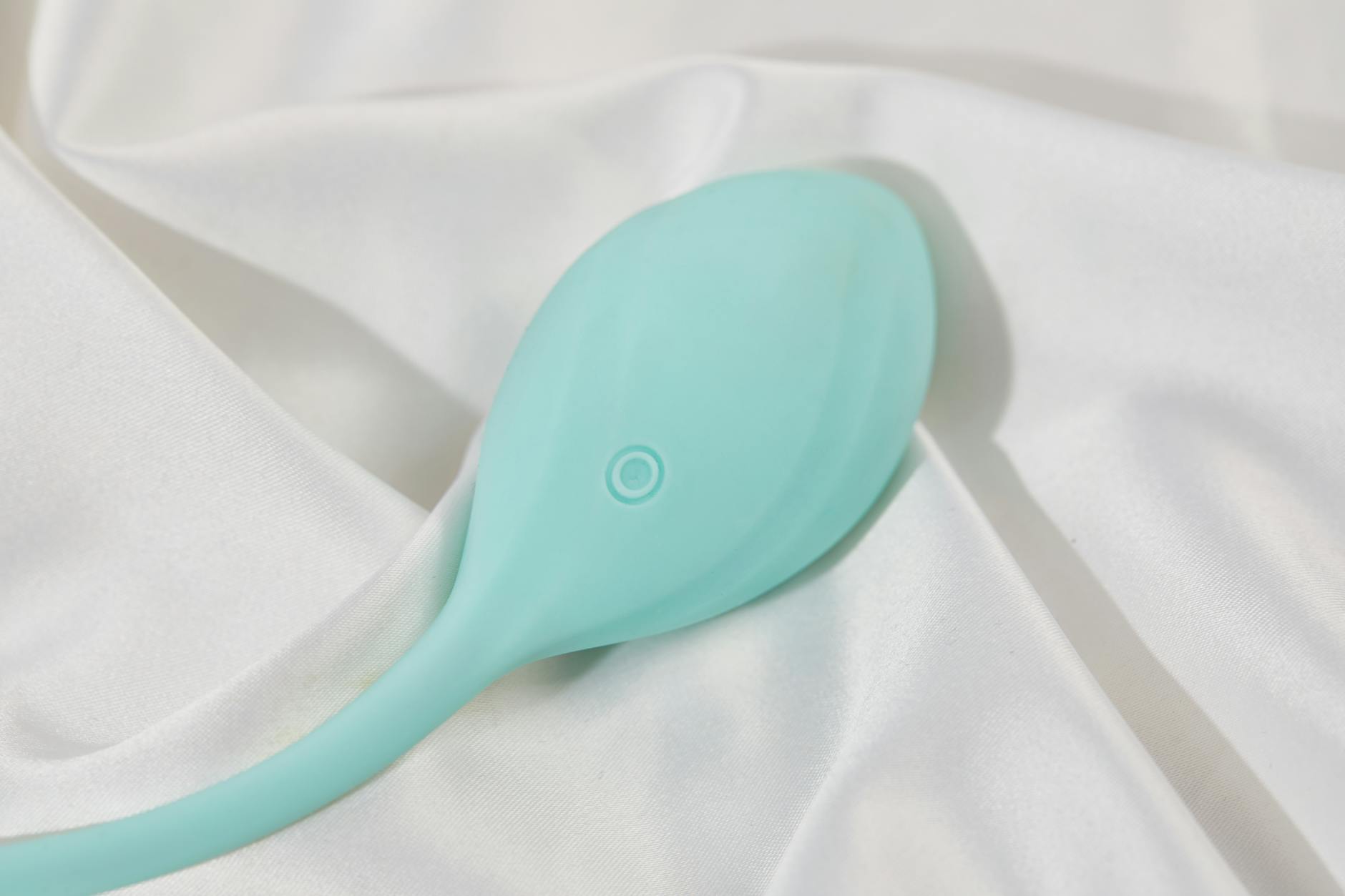
Here's the thing about your cycle and sensation
Your lemon vibrator doesn't change. Your nervous system does. Over the course of your menstrual cycle, the hormonal fluctuations that regulate your period also change how your clitoris perceives touch, pressure, and vibration. This isn't in your head. It's not about arousal or mood or whether you're "into it" that day. It's neurology.
Most people with vulvas report that their lemon clitoral vibrator, their go-to lemon sexual toy, or any clitoral vibrators feel noticeably different depending on where they are in their cycle. Some days it feels like the perfect intensity. Other days you're cranking it up and wondering if the battery died. Neither feeling is wrong. Both are real.
Let me walk you through what's actually happening in your body, when you'll feel it most, and what to do about it.
How estrogen shifts your sensitivity
During the follicular phase (from the first day of your period through ovulation, roughly days 1 to 14 of a typical 28-day cycle), estrogen is climbing. This hormone does several things to your clitoris and vulva that directly affect how vibration feels:
Estrogen increases blood flow to your genitals. More blood means more engorged tissue, which makes nerve endings slightly less responsive to subtle sensations but often more responsive to direct, sustained vibration. Your vulva becomes more swollen, almost like the tissue is already partially aroused before you even start.
This is why many people report that during the follicular phase, especially right before ovulation, their lemon vibrator feels perfect at its standard setting. The tissue is primed. The nerves are ready. Everything works.
Then your period actually starts. Estrogen plummets. Your vulva deflates slightly. The tissue that was plump and engorged becomes less so. Suddenly, the same vibration pattern that felt amazing a week ago feels muted or even uncomfortable. You're not broken. Your hormonal environment shifted.
The luteal phase slowdown
After ovulation, you enter the luteal phase. Progesterone rises. Estrogen dips (though it does rise again briefly before your period). This is the longest part of your cycle, typically days 15 to 28.
During this phase, many people report decreased clitoral sensitivity. Some describe it as numbness. Others say vibration just feels less intense, like they're wearing a protective layer. A few people say their lemon sucker or other clitoral vibrators feel uncomfortable or even irritating during this time.
Why? Progesterone dampens arousal neurologically. It's not a bug. It's a feature. Progesterone is about conservation, introspection, and slowing down. Your nervous system is literally less reactive to external stimulation. Your clitoris doesn't need to be primed for conception. The signals aren't firing as urgently.
This is also why many people experience a dip in sexual desire in the luteal phase. It's not depression or loss of interest in your partner. It's your brain and body on progesterone, which works differently than they do on estrogen.
The menstrual phase specifically
During your actual period, you get a unique combination. Estrogen is low. Progesterone is dropping. Your vulva is likely tender or sensitive in a different way than usual. Some people feel hypersensitive during menstruation. Others feel completely numb.
If you use your lemon vibrator during your period, you might notice that light, teasing patterns feel too intense while stronger, broader vibrations feel better. This is because the tissue is inflamed and the nerve endings are firing differently. Direct clitoral stimulation sometimes feels uncomfortable. Indirect stimulation (vibration through the mons pubis or labia instead of directly on the clitoris) often works better.
This also varies wildly between people. Some folks have no change in sensation or pleasure during their period. Others experience a dramatic shift. Both are completely normal.
When sensation typically peaks
If there's a "sweet spot" in your cycle for vibration intensity, it's usually a few days before ovulation. This is when estrogen hits its peak. Your clitoris is maximally engorged. Your nervous system is primed for arousal. You might find that your lemon clitoral vibrator feels incredibly responsive. You need less time to warm up. The vibration feels more pleasurable at lower settings.
Some people can orgasm more easily during this window. Some experience stronger orgasms. Some report that sensations feel almost heightened, like the volume on everything has been turned up.
This window is roughly days 12 to 14 in a standard cycle, but yours might be earlier or later depending on your cycle length. If you track your cycle at all, you probably already know roughly when this happens for you.
The inverse is usually days 20 to 28 (the late luteal phase). This is when most people report the biggest dip in sensitivity. If you use your lemon vibrator during this time and it feels weak, you're not imagining it. Your hormonal environment is literally making your clitoris less reactive. It's temporary. Your sensitivity will return.
What to do when intensity drops
Here are the practical moves I recommend to clients:
First, don't assume the device is broken. If your lemon vibrator worked perfectly two weeks ago and now feels weak, your cycle is the likely culprit, not a battery issue or a broken motor. This is worth confirming, but it's the first thing to rule out.
Second, adjust your expectations, not your toy. Instead of cranking the vibration higher, try changing the pattern. Some people find that faster, higher-frequency vibrations (like pattern 3 or 4 on Hello Nancy's Lem) feel more intense than lower-frequency patterns, even at the same intensity level. Your nervous system might respond better to pattern variation than power escalation.
Third, extend your warm-up time. When you're in a low-sensitivity phase, your arousal takes longer to build. Give yourself permission to spend 20 to 30 minutes on foreplay, teasing, mental engagement, whatever gets you there. Your body isn't broken. It just has a longer ramp-up time.
Fourth, use indirect stimulation. During phases when direct clitoral vibration feels weak or uncomfortable, try stimulating the hood, the mons pubis, or the inner labia instead. Let the vibration travel through tissue rather than landing directly on the most sensitive nerve-dense spot. Honestly, this can feel incredible even in high-sensitivity phases. It's not a consolation prize. It's just different.
Fifth, add lube intentionally. When tissue is less engorged, lubrication matters more. Water-based lube can make a huge difference in how vibration feels against less swollen tissue. It's not about dryness necessarily. It's about creating a smoother interface between the toy and your skin.
Tracking your pattern
After a few cycles, you'll probably notice a rhythm. Many people find that days 11 to 15 of their cycle are peak sensitivity days. Days 23 to 28 are the dips. Days 1 to 7 are variable. Once you know your pattern, you can plan accordingly.
Some people deliberately save their lemon sexual toys for their peak sensitivity window because they want to experience maximum pleasure. Others use the low-sensitivity phases as permission to experiment with new patterns or toys without the pressure of chasing sensation.
Neither approach is right. It's whatever serves your pleasure.
When sensation shifts are actually a sign of something else
If your sensitivity is always low, regardless of cycle phase, that's worth exploring with a doctor. Low clitoral sensitivity can be a sign of nerve damage, medication side effects, hormonal conditions like PCOS, or sometimes just individual variation. If a shift is painful or accompanied by unusual discharge, that's also worth a check-in with a gynecologist.
But if you notice a predictable pattern that roughly lines up with your cycle, you don't have a problem. You have a nervous system that's responsive to hormones, which is how it's supposed to work.
Why understanding your cycle changes everything
Here's what I've learned from years of talking to people about pleasure. When you understand that your sensitivity naturally fluctuates, you stop pathologizing yourself. You stop thinking, "Something's wrong with me. My lemon vibrator doesn't work anymore." Instead, you think, "Oh, I'm in the luteal phase. My body's doing its job. I'll adjust."
That shift from self-blame to self-understanding changes everything. It makes pleasure feel less fraught. It makes using your clitoral vibrators feel less like a performance and more like honoring your actual body as it exists today.
Your lemon vibrator is fine. You're fine. Your hormones are just doing what they always do.
Frequently asked questions
Does my period affect vibrator sensation for all types of toys?
Yes, though the effect might be more or less noticeable depending on the vibration pattern. Suction-based toys like the Hello Nancy Lem sometimes feel different across the cycle than traditional vibrators because suction works through a different mechanism. But hormonal shifts affect nerve sensitivity globally, so you'll notice some change with any external vibration toy.
Can I use my lemon vibrator during my period?
Absolutely. Your choice. Some people avoid it because sensitivity is lower or tissue feels tender. Others prefer using toys during their period because the increased blood flow to the area sometimes feels good. You might experiment and find that indirect stimulation (vibrating over the mons or labia rather than directly on the clitoris) feels better than direct contact during menstruation.
Does oral sex feel different across my cycle too?
Yes. The same hormonal shifts that change how your clitoris responds to vibration also affect how you respond to touch, pressure, and tongue movement. Many people report that oral sex feels more pleasurable around ovulation and less pleasurable during the luteal phase. If you notice a pattern, that's not about your partner's technique. It's your cycle.
Should I buy a stronger vibrator if the low-sensitivity phase is really uncomfortable?
Maybe not. Before investing in a new toy, try the low-cost adjustments first: longer warm-up, pattern variation, indirect stimulation, lube, and positioning changes. Many people find that tweaking their approach fixes the problem without a new purchase. That said, if you're consistently unsatisfied even with adjustments, a toy with more pattern variety might genuinely help. The Hello Nancy Lem has six patterns, which gives you more options to work with across different cycle phases.
Is it normal to have zero sensation during certain days?
It's on the spectrum of normal, especially during the late luteal phase. Some people describe it as feeling numb. If it happens consistently during the same cycle window and then returns, hormones are the likely culprit. If numbness happens randomly or is accompanied by pain, that's worth mentioning to a doctor.
Can hormonal birth control change how toys feel?
Yes. Hormonal contraceptives suppress the natural hormonal cycle, which means you might have less dramatic fluctuation in sensitivity across the month. Some people on hormonal birth control report more consistent sensation year-round. Others notice that even with steady hormones, they still have some subtle variation. It depends on the person and the method.
Your pleasure has a rhythm
Understanding that your cycle affects how pleasure feels isn't about limiting yourself. It's about working with your body instead of against it. Some windows in your cycle are going to feel incredible. Others are going to feel slower. Both are fine. Both are you.
If you want support navigating intimacy and pleasure across life transitions, your cycle, or relationship changes, reach out. You can also explore Hello Nancy's blog and resources to find what works best for you.