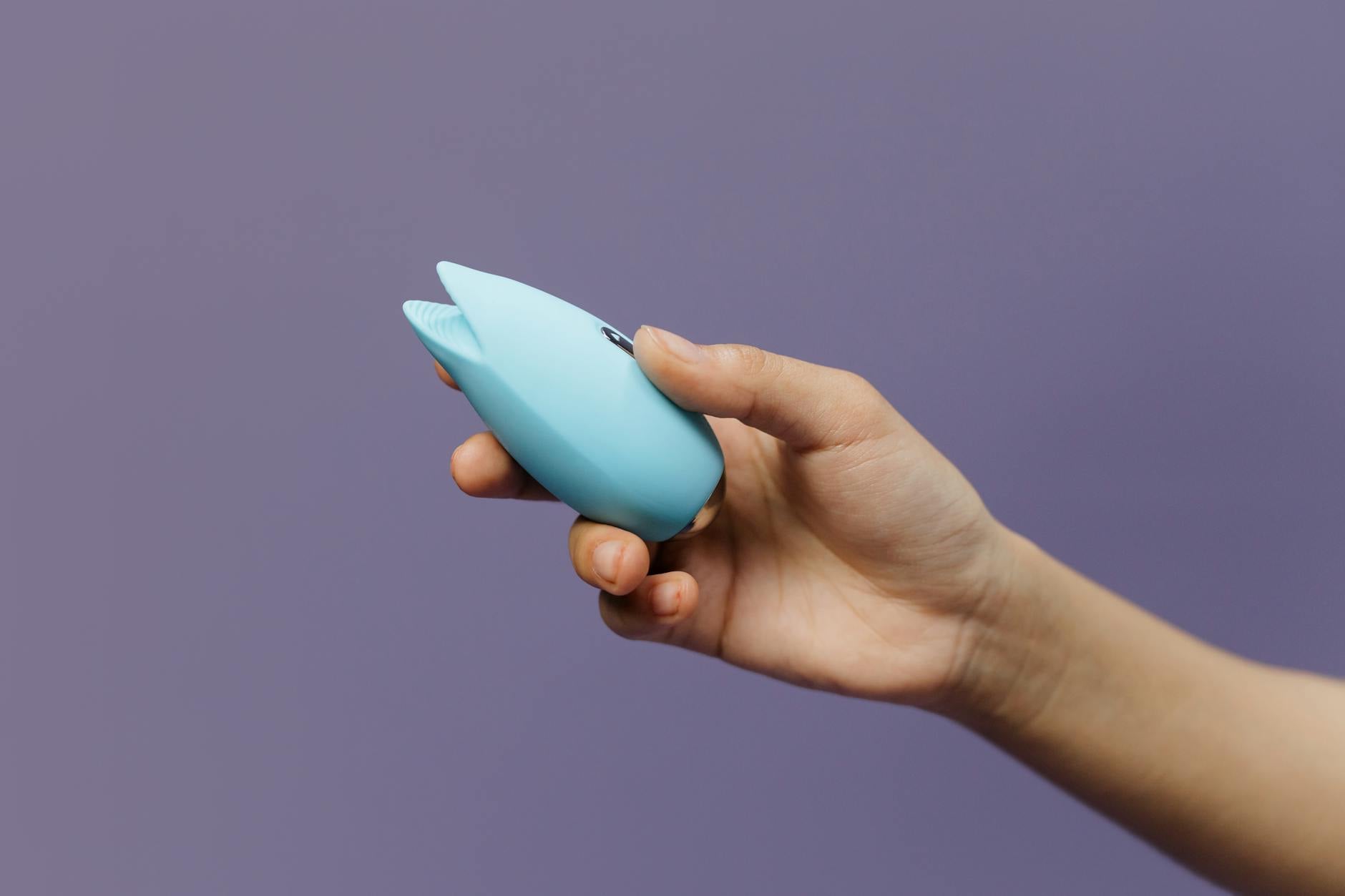
Here's what nobody tells you about introducing a toy with someone new
Using a lemon vibrator alone feels one way. Using one with a new partner feels completely different. Not because the vibrator changed. Because your nervous system changed.
When you're with someone you've known for years, your body has learned their presence. It knows the room is safe. But early in a relationship, your nervous system is doing double duty: it's managing attraction and arousal while simultaneously running threat detection on a person you don't yet fully trust. That's not a failure of the relationship. That's neurobiology.
Introducing a lemon clitoral vibrator into that context triggers something deeper than physical response. It forces a conversation about vulnerability, desire, and what you're willing to show.
The nervous system piece nobody mentions
Your body has two main operating systems during intimacy: the sympathetic nervous system (fight-or-flight) and the parasympathetic nervous system (rest-and-digest). Pleasure lives in the parasympathetic state. Arousal can happen in either.
When you're using a clitoral vibrator solo, your parasympathetic system can settle. You control the speed, the timing, the exact pressure. There's no one else in the room whose presence requires part of your attention.
With a new partner, even a trusted one, your sympathetic system stays partially engaged. You're aware of them. You're noticing their reaction, their breathing, their body position relative to yours. That awareness isn't a problem. But it does change what sensation registers as pleasure versus what reads as stimulation.
Some people find lemon vibrators feel more intense with a new partner because the added nervous activation heightens sensitivity. Others find they need more time to settle before the toy actually feels good. Both responses are completely normal.
Why sensation genuinely changes
It's not psychological—though psychology matters. There's actual physiology happening.
When you introduce a lemon suction toy with someone new, several things shift simultaneously:
Blood flow redirects. Arousal pulls blood toward your genitals, but anxiety or even mild uncertainty can restrict that flow slightly. A lemon vibrator's suction technology requires good blood flow to the clitoris to feel its best. If your nervous system is even mildly guarded, the sensation changes.
Pelvic floor tension increases. Early in a relationship, even without realizing it, many people hold their pelvic floor slightly tighter. This is an ancient protective reflex. The pelvic floor surrounds and supports the clitoris, so when it's tense, suction sensation feels different—sometimes sharper, sometimes less responsive.
Arousal timeline shifts. You might need 15 minutes alone to warm up with a lemon clitoral vibrator. With a new partner present, you might need 25. The toy works the same way. Your body just takes longer to get there.
The vulnerability factor changes everything
There's a reason so many people feel awkward introducing a toy early on.
Using a lemon vibrator is an explicit statement: "This is what works for my body. This is what I need." In a new relationship, that confession carries weight. You're saying, "I have specific pleasure requirements, and I'm willing to show you." You're also saying, "I'm willing to look at your face while I do it."
That's vulnerable in a way that solo use simply isn't.
I've worked with countless couples navigating this, and the pattern is consistent. The first time using a lemon clitoral vibrator together, many people report that the physical sensation feels secondary to the emotional experience. You might orgasm, or you might not. But what you're really processing is the feeling of being seen.
Some partners get excited and engaged—they watch, they ask questions, they help. Others freeze slightly or try to hide their own discomfort. All of those reactions get picked up by your nervous system, which then influences whether a lemon suction toy feels intimate or uncomfortable.
How new-relationship chemistry affects sensation
If you feel secure and wanted, a lemon vibrator amplifies those feelings. The suction sensation becomes connected to his attention, her enthusiasm, their presence. That creates a feedback loop where pleasure intensifies.
If there's hesitation or judgment in the room (real or imagined), the same toy can feel exposing. Sensation flatlines because your body is partly defending, not entirely opening.
This is why the same lemon clitoral vibrator can feel amazing with one partner and awkward with another. It's not the toy. It's the relational context.
When to introduce it and how timing matters
There's no universal timeline for introducing a lemon vibrator with someone new. But there are patterns that create better outcomes.
Introducing a toy in the first few weeks rarely works well, even if the connection feels strong. Your nervous system simply hasn't fully registered safety yet. Waiting until you've had a few conversations about desire, pleasure, and what you both like gives your body time to settle.
The conversation matters more than the timing. If you can say, "I really enjoy using this, and I'd love to include it when we're together," that's radically different from sheepishly pulling out a lemon suction toy without context. Forewarning your partner gives them time to process, ask questions, and get curious instead of surprised.
Consider starting with a lemon vibrator during foreplay, not as the main event. That removes pressure and lets sensation unfold more naturally. Many couples find that the second or third time using a lemon clitoral vibrator together, the nervousness drops significantly and the pleasure shows up instead.
What changes between solo and partnered use
When you use a lemon vibrator alone, you're tuning into pure sensation. The intensity, the rhythm, the exact position—all driven by what your body is asking for in that moment.
With a new partner, there's a relational layer. You're attuning to them while also attuning to the toy. You might find yourself chasing a sensation that felt natural solo because part of your attention is on your partner's reaction. That's not wrong. It just requires a different kind of presence.
Some people discover they actually prefer lemon vibrators with a partner, even early on. The combination of sensation and connection creates something solo use doesn't quite match. Others find solo use remains their sweet spot and partnered use is secondary. Neither is the "right" way to experience a clitoral vibrator.
What matters is knowing which one you are so you can communicate that. "I love this vibrator, and I also enjoy using it alone more than with a partner right now" is completely valid information to share.
The arousal-to-pleasure pipeline shifts with a witness
In early relationships, arousal doesn't automatically convert to pleasure the way it does once you've been with someone longer.
You can be fully aroused and have a lemon clitoral vibrator feel like nothing. Or you can be mildly aroused and have the same toy feel incredible. The difference usually comes down to whether your nervous system reads the situation as safe.
This is why the best lemon vibrators for new relationships are ones that give you control. You don't want a partner controlling the speed or intensity—not because that can't feel good eventually, but because early on, you need the agency. You need to be able to pause, adjust, or stop without having to negotiate in the moment.
Suction technology like the lemon vibrator offers that. You control the suction level. You control when you turn it on. That autonomy within a shared experience allows your nervous system to relax faster.
FAQ
Why does a lemon vibrator feel less intense with a new partner?
Intensity depends partly on blood flow and pelvic floor relaxation, both of which can be affected by nervous system activation. In a new relationship, even mild uncertainty can restrict blood flow slightly or create pelvic floor tension. Additionally, part of your attention is on your partner rather than fully on sensation, which can make physical intensity feel muted. This is temporary—as trust builds, sensation typically normalizes.
Is it normal to feel awkward using a clitoral vibrator with someone new?
Completely. You're being vulnerable in a specific way: you're showing a partner exactly what your body needs. That requires trust that often hasn't fully formed yet. Give yourself grace. The awkwardness usually fades within a couple of uses once you realize the partner finds it hot rather than strange.
Should I use a lemon vibrator on the first time having sex with someone new?
No. First sexual experiences are already handling a lot—new body, new rhythm, new anatomy. Add a lemon clitoral vibrator once you've had a few relaxed sexual experiences together and you both feel confident with each other's bodies. You want the focus to be on connection first, then you can layer in accessories that amplify pleasure.
Does my partner need to know I'm more sensitive to sensation when we use a lemon vibrator together?
Yes. Communication removes guesswork. You might say something like, "I find I need a bit more time to warm up with the vibrator when you're here, and that's normal for me." Or, "I'm more sensitive than when I use this alone, so let's start slow." That context helps your partner understand what they're observing instead of misinterpreting it.
Can a lemon vibrator actually bring me closer to my new partner?
Yes, if both of you approach it with curiosity. Using a toy together requires communication, vulnerability, and attention. Those are intimacy builders. Many couples report that introducing a lemon clitoral vibrator with good communication deepens their connection because they've had to articulate desire and watch each other experience pleasure.
What if my new partner seems uncomfortable with lemon vibrators?
That's data. Listen to why without defending the toy. Some people need time. Some have old associations. Some worry they're not "enough." The conversation about what the vibrator is for matters more than the vibrator itself. You're not replacing them. You're adding a dimension of pleasure that exists independently of them.
The long view
A lemon vibrator doesn't change its function depending on who's in the room. But your nervous system absolutely changes. In a new relationship, vulnerability is real and sensation is intertwined with emotional safety.
Over time, as trust builds, you'll likely find that pleasure with a partner starts to feel as fluid as pleasure alone. The tool stays the same. The trust deepens. The sensation follows.
For now, give yourself permission to experience a lemon clitoral vibrator differently with a new partner than you do solo. That's not a limitation. That's your nervous system doing exactly what it's supposed to do. Work with it, communicate about it, and let pleasure unfold at the pace that actually feels good.