
Let's talk about the sensitivity problem nobody mentions
You've probably heard that lemon clitoral vibrators are great. What nobody explains is why a Lem or other lemon sucker actually works so much better than a traditional vibrator when your clitoris feels too sensitive. The difference isn't marketing fluff. It's biomechanics.
Most people assume sensitivity means "broken" or "too damaged to enjoy pleasure." Actually, it often means your nervous system is doing exactly what it's supposed to do. And when a conventional vibrator feels like it's sandblasting your clitoris, a lemon vibrator approach can completely change what's possible.
How traditional vibration actually overwhelms you
A standard vibrator works through direct mechanical oscillation. The motor moves the silicone or plastic head back and forth hundreds of times per second. This puts sustained, repetitive pressure directly onto the clitoral glans. For some people, this feels amazing. For others, it registers as overwhelming, almost painful stimulation.
Why the difference? The clitoris has about 8,000 nerve endings concentrated in a tiny area. That density is why it's such a pleasure hotspot. But it also means a lot of sensation gets packed into a very small space very quickly. Add direct vibration, and you've essentially got a full-power electric toothbrush on the most sensitive nerve cluster on your body.
For people with a highly responsive clitoris, this crosses from "pleasurable" to "jangling" in seconds. You might find yourself tensing up, losing arousal, or just shutting down because the stimulation is too much.
Why air-suction lemon vibrators feel different
Here's where lemon clitoral vibrators change the game. Instead of vibrating directly against sensitive tissue, a lemon sucker uses gentle air-pulse technology. The device creates a soft seal around the clitoral area and gently pulls and releases air in rhythmic patterns.
This accomplishes three things your standard vibrator doesn't:
First, it distributes sensation. Rather than hammering one spot, the air-suction motion engages a wider nerve area. The stimulation feels broader and less concentrated.
Second, it's gentler on the tissue itself. There's no direct mechanical friction. This matters especially if you've ever experienced irritation, redness, or that raw feeling after using a powerful vibrator.
Third, it ramps up more gradually. With traditional vibrators, you hit intensity levels that feel jarring. Lemon vibrators let you build sensation in smaller increments. The lowest setting on a Lem might feel like 30% intensity, with room to grow without ever hitting "overwhelming."
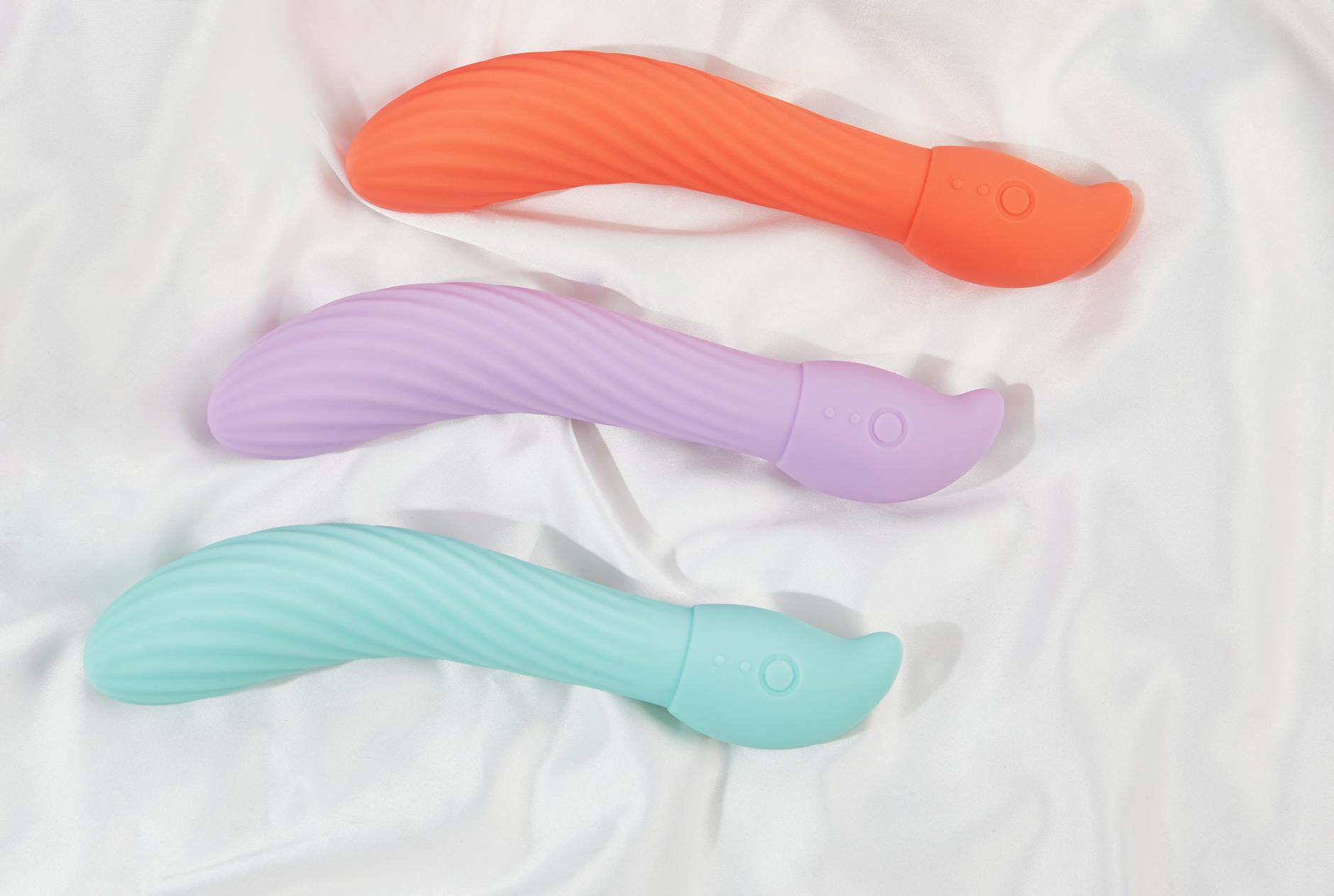
Photo by IFONNX Toys on Pexels
The clitoral sensitivity spectrum
Sensitivity isn't one thing. Here's what I see in practice:
Nerve-dense clitorises. Some people's clitoral tissue is naturally more densely innervated. More nerve endings mean faster-firing pleasure signals. This is often genetic. These folks can feel overstimulated by anything stronger than pattern 1 on most vibrators.
Post-hormonal shifts. If you've been through pregnancy, hormonal birth control, or perimenopause, your clitoral tissue might feel more sensitive than it used to. Thinner tissue, less protective padding from fat and connective tissue. A lemon clitoral vibrator is often more comfortable than it was before the shift.
Inflammation or micro-tears. If you've used a very intense vibrator, had rough sex, or dealt with yeast infections, the tissue underneath needs gentler touch while it heals. Air-suction is radically gentler than vibration in this situation.
Anxiety-driven tension. Sometimes sensitivity is actually protective tension. Your nervous system braces because it's learned to expect too-much stimulation. When you switch to a gentler lemon vibrator, the whole system can relax, and pleasure becomes possible again.
What the research actually says about lemon vibrators
Air-pulse technology has been gaining clinical attention for exactly this reason. Studies on similar devices show higher satisfaction rates among people with sensitive clitorises compared to traditional vibrators. The mechanism is straightforward: less tissue trauma, more distributed stimulation, better user control.
One small study published in The Journal of Sexual Medicine found that 73% of participants with clitoral sensitivity switched from vibrators to suction-based devices and reported sustained satisfaction over 6 months. The reasons cited: less irritation, easier to control intensity, and paradoxically, stronger orgasms once tissue adaptation happened.
What researchers think is happening: lemon vibrators trigger a different neural pathway. Instead of the "touch" sensors getting overwhelmed, you're engaging the "pressure" and "pulse" sensors. These fire differently and create a different quality of sensation.
The intensity problem (and why it actually matters)
Traditional vibrators come in levels, but the jump between levels is often huge. You might go from "almost nothing" to "way too much" with one button press. This is especially annoying when you're sensitive.
Lemon clitoral vibrators typically have more granular control. The Lem, for example, has distinct patterns and intensity levels that don't jump dramatically. This means you can find the exact sweet spot for your body on a given day.
Why does that matter? Because sensitivity isn't static. On a day when you're stressed, tired, or just not as aroused, you need less intense stimulation to feel good. On a day when you're well-rested and excited, you might want to build up to something stronger. A device that lets you dial in what you actually need is infinitely more useful than one with three settings that are too intense, way too intense, and why would anyone use this.
How to transition from traditional vibrators to air-suction
If you've been frustrated with standard vibrators, switching to a lemon sucker might feel revelatory. Here's how to make it work:
Start with the lowest setting. Seriously. It will feel like almost nothing compared to what you're used to. That's the point. Use that pattern alone for at least three sessions before moving up.
Let arousal build first. Don't jump straight to the lemon vibrator. Spend 10-15 minutes on foreplay, fantasy, or whatever gets you naturally excited first. Then introduce the device.
Explore patterns, not just intensity. Many lemon vibrators have multiple rhythms. Some people find a specific pattern works better than raw intensity. The Lem has several, and many people prefer certain patterns at certain times.
Moisture helps. A little water-based lube creates a better seal and makes the air-suction sensation feel smoother. It's not required, but it helps.
Give it time. Your nervous system might need 3-5 sessions to reset from whatever intensity you've been using. That's okay. Pleasure is a skill you're relearning.
When lemon vibrators might not be the answer
Here's the honest part: lemon clitoral vibrators are fantastic for sensitivity issues, but they're not magic. If you're experiencing pain during stimulation (not just discomfort, but actual pain), see a healthcare provider. Genitourinary syndrome of menopause, lichen sclerosus, or other conditions need medical attention, not just a better toy.
If sensitivity is paired with no desire at all, the vibrator probably isn't the first thing to address. Desire comes from a dozen places: stress, relationship dynamics, medication side effects, burnout. A lemon vibrator can work beautifully once desire is back, but it won't resurrect desire on its own.
If you're sensitive because you're forcing pleasure when you don't actually want sex right now, a device won't help. That's a schedule and communication problem, not a technology problem.
FAQ: Common questions about lemon vibrators and sensitivity
Can a lemon vibrator actually feel stronger than a traditional vibrator even though it seems gentler?
Yes, often. Because the stimulation pattern is different, it accesses different nerve pathways. People frequently report that a Lem on pattern 3 feels more intense and more satisfying than a traditional vibrator on high. The quality of the sensation is different, so it doesn't feel like just turning up the volume.
Do you need to use lemon vibrators every day to see results?
No. Sensitivity adaptations usually show up within 3-7 days of using a gentler device 2-3 times per week. You don't need to do it constantly. In fact, building in rest days is good for nervous system recovery.
Are lemon clitoral vibrators less powerful than traditional vibrators?
They're differently powerful. Raw power isn't the only measure of what works. A lemon vibrator might have a lower overall vibration frequency, but the quality of the stimulation and the control you have often makes it feel more effective for sensitive users.
What's the difference between a Lem and other lemon vibrators?
Design, motor strength, and pattern variety mainly. The Lem is specifically engineered with suction-pulse technology and offers multiple patterns. Other options exist, but the Lem is built for exactly this use case. If you're starting with clitoral sensitivity, it's worth trying.
Can using a lemon vibrator make you less sensitive over time?
Not in the negative sense. What happens is your nervous system gets used to the sensation in a healthy way. You might find you can gradually move to slightly stronger patterns without discomfort. That's adaptation, not numbing. It's actually what you want.
Is there an age or body type these work better for?
No. Sensitivity is about nerve density and tissue thickness, not age or body shape. Anyone with a clitoris can benefit from a gentler approach. That said, people in perimenopause or post-menopause often find them especially helpful because hormonal shifts do change clitoral sensitivity.
The bigger picture
Pleasure shouldn't feel like a fight between you and your body. If traditional vibrators have felt overwhelming, rough, or just wrong, it's not because you're broken. It's because that technology wasn't built for your specific nerve response.
Lemon vibrators, and especially air-suction designs like the Lem, were created to solve exactly that problem. They let you explore sensation at the pace and intensity that actually feels good to you, not the pace a motor can force.
If you're thinking about making the switch, you have permission to do this just for you. Not to fix anything. Just to discover what pleasure feels like when it's actually designed for your body. That's what Hello Nancy tools are for.