Here's the thing about clitoral sensitivity
Not all clits are wired the same. You might have a friend who loves intense vibration and thinks gentler toys are a waste, while you'd rather someone go near you with a feather. Both of you are completely normal. Neither of you is broken. The problem isn't your body—it's that most vibrator guides treat sensitivity like it's a single spectrum from "numb" to "hypersensitive." It's not. It's more like a fingerprint.
Your clitoris has about 8,000 nerve endings, and they don't all respond to stimulation the same way. Some people's nerves light up fast and hard. Others need patient build-up. Some find direct contact overwhelming and need indirect pressure instead. The good news: once you understand your own sensitivity pattern, picking the right Lemon clitoral vibrator becomes straightforward.
The four main sensitivity profiles
Most people fall into one of these categories. You might feel yourself in more than one depending on time of cycle, stress, or whether you've warmed up properly.
Slow-to-build sensitivity. Your clitoris needs time to wake up. You might not feel much in the first minute or two of stimulation, and jumping straight to high intensity feels jarring. You're not numb. You just need 10-20 minutes of gradual warmth before the nerve endings really respond. This is wildly common postpartum, after hormonal shifts, or if you've been stressed.
Peak-responsive sensitivity. Your clitoris has a sweet spot of intensity—usually around pattern 3 or 4 on a Lemon vibrator—and anything stronger actually feels less good, not more. You might experience something close to numbness above that point. This is the opposite of "more power equals more pleasure," and it's equally valid.
Rapidly-responsive sensitivity. You light up fast. Even gentle stimulation triggers arousal quickly, and you might reach intensity and climax sooner than partners expect. This isn't "easy to please"—it's just your wiring. It means your nervous system is efficient.
Variable sensitivity. Your clitoris responds differently depending on context. You might be peak-responsive one day and slow-to-build the next. Hormones, stress, sleep, and whether you've been thinking about someone all day genuinely change your physical response. This is so common it's almost the default.
What Lemon vibrators offer (and why it matters)
Lemon intimate toys use suction stimulation rather than pure vibration. That's a key distinction when you're thinking about sensitivity.
Traditional vibrators buzz directly against your clitoris at a fixed frequency. That works brilliantly for some people. For others, especially those with peak-responsive or variable sensitivity, it can feel overwhelming or numb-inducing really fast.
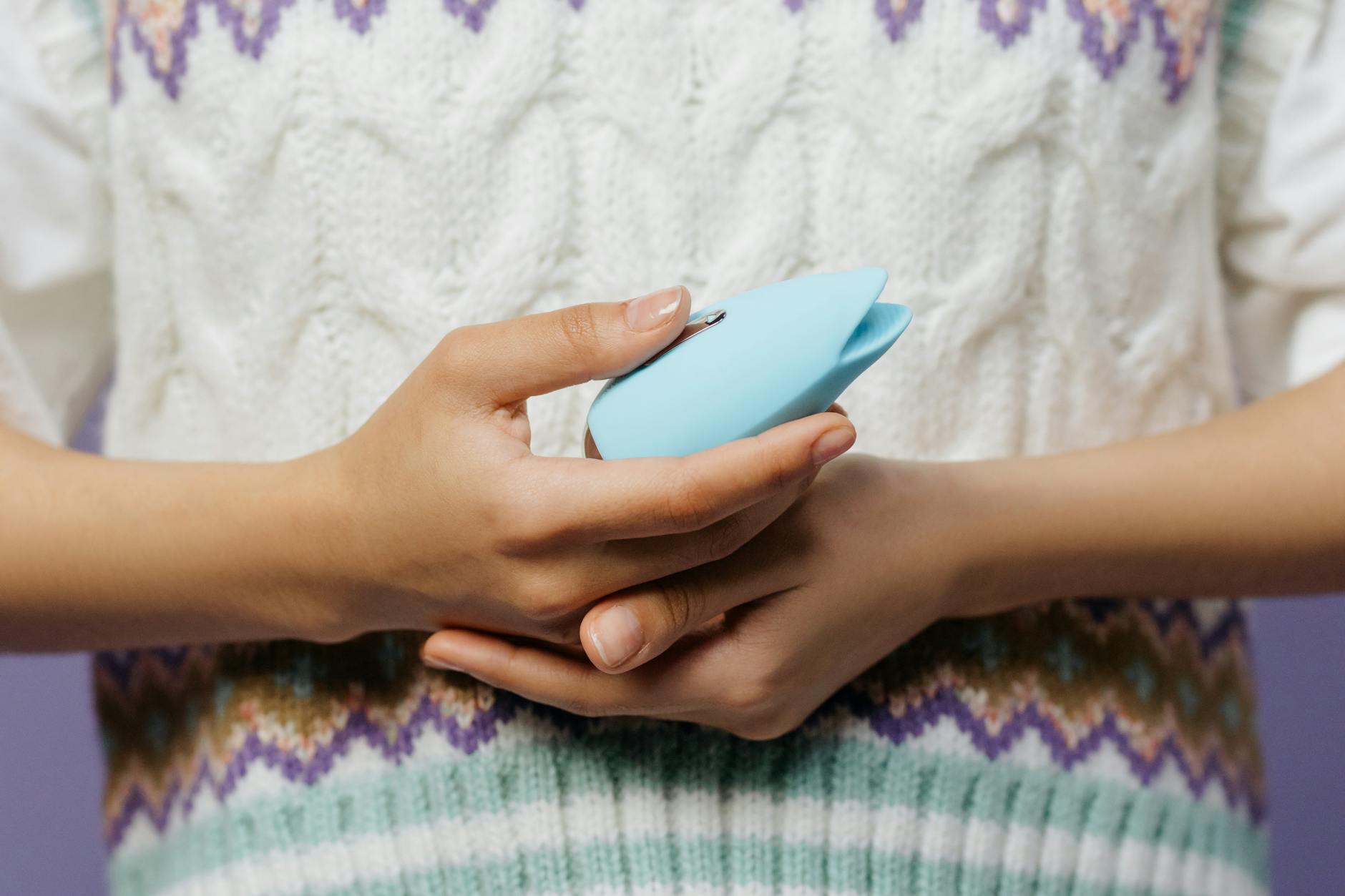
Lemon clitoral vibrators work through gentle suction combined with subtle vibration. Instead of direct buzz contact, you're getting rhythmic stimulation that builds arousal in a different way. Think of it as the difference between someone touching you directly versus someone blowing softly on your skin. Both create sensation, but the pathway is different.
For slow-to-build sensitivity, this matters because the suction approach allows for longer, gentler warm-up without that jarring intensity jump. For peak-responsive folks, starting at lower suction patterns means you can stay in your sweet spot longer without the numbness that comes from sustained high-intensity buzz.
Photo by FounderTips . on Pexels
Matching your sensitivity to your approach
If you're slow-to-build: Start with a Lemon vibrator on pattern 1 or 2 and plan to spend 15-25 minutes in the foreplay zone. Don't skip the warm-up thinking you're "broken"—you're not. Your body is just being honest about what it needs. The suction approach is actually ideal for you because it feels more like foreplay and less like a jackhammer. Budget time. Use lube. Let your mind wander. Your clitoris will show up.
If you're peak-responsive: The most important thing is knowing your sweet spot number. For many people, that's pattern 3 on a Lemon toy. Once you find it, you might spend most of your session there rather than climbing intensity. This is not "less" pleasure—it's different pleasure, and it often builds to really intense, full-body orgasms because you're staying in the zone where your nerves are firing optimally. Some people even find they prefer staying at peak rather than building higher.
If you're rapidly-responsive: You actually have an advantage with Lemon vibrators because you can start lower and still enjoy the ride without pressure to rush. The suction patterns feel less aggressive than traditional vibration, so you have more room to enjoy arousal without immediately hitting climax. This gives your partner time to be present if you're playing together, and gives you time to explore what you like beyond just "getting there."
If you're variable: You need a toy that's flexible—and Lemon vibrators excel here. With multiple patterns and the ability to start as gentle as pattern 1, you can meet yourself wherever you are on any given day. Some days you climb straight to pattern 4. Other days you spend the whole session at pattern 2. Both are fine.
The technique piece that changes everything
Here's something almost no one mentions: your vibrator choice matters less than your angle.
Direct clitoral contact works for some people and feels too intense for others. Indirect stimulation—where the vibrator hovers slightly to the side or above your clitoris, or works through the clitoral hood—can transform the experience if direct contact feels overwhelming.
With a Lemon clitoral vibrator, you have control. You're not locked into one angle. If pattern 3 directly on your clitoris feels numb, try the same pattern just to the side. If you're reaching climax too fast, try working the suction just off to one side rather than dead-on. Different angle, same toy, completely different sensation.
How to use Lemon vibrators when you're nervous about orgasm timing covers this in detail—the confidence piece matters as much as the mechanics.
When to adjust versus when to switch
Before you assume you need a different toy, try these adjustments first:
If you're feeling numb after 10 minutes, stop. Give your clitoris 5 minutes to recover sensation. Resume at a lower pattern. Numbness is usually a sign you've hit a plateau at that intensity, not that you need more intensity.
If initial patterns feel too soft, build your arousal first. Spend 5-10 minutes with foreplay, mental focus, or lower-intensity stimulation before going to your preferred pattern. You're not broken if gentle doesn't work on a "cold" clitoris.
If every pattern feels too intense no matter what, try indirect stimulation—work the toy around the clitoral hood rather than directly on the head. This reduces sensation while keeping stimulation present.
If you're still stuck after honest experimentation, then you might genuinely need a different tool. But most people find that angle, warm-up time, and pattern selection solve the problem before a new purchase does.
The variable sensitivity reality
Honestly, if you're variable—and most people are—you need a toy that can meet you across that range. That's where a Lemon vibrator's multiple patterns really shine. Instead of owning three different toys, you own one that functions across slow-to-build, peak-responsive, and everything in between.
Your sensitivity might shift month to month based on your cycle. It might change year to year as hormones evolve. It might be different on high-stress weeks than calm weeks. This is not instability. It's just being human. A toy with range lets you stay adaptable without overthinking it.
People also ask
How do I know if I have clitoral hypersensitivity?
Clitoral hypersensitivity typically means that even very light touch causes pain or intense discomfort, or that stimulation that normally feels good becomes unbearable quickly. This is different from "needing a lower pattern"—it's actual discomfort. If you experience real pain with any vibrator, that's worth mentioning to a healthcare provider, particularly if it's new. Sometimes sensitivity spikes can signal infection, inflammation, or hormonal shifts that benefit from medical input. In the meantime, many people with hypersensitivity find that external (indirect) stimulation through clothing or with a barrier between the toy and skin helps significantly.
Can my sensitivity change based on my cycle?
Completely. Your clitoris is responsive to hormonal fluctuation just like the rest of your reproductive system. Many people notice their clitoris feels more sensitive in the days leading up to ovulation (when estrogen peaks) and less responsive in the days before menstruation (when progesterone is higher). Some find they're slow-to-build one week and rapidly-responsive the next. This is normal, and it's actually useful information—it tells you that your body is responsive and dynamic, not broken or stuck.
What if I can't reach orgasm no matter what pattern I use?
There are a few things worth checking: First, are you actually warm and aroused before you start using the toy, or are you jumping straight to stimulation? A vibrator is not foreplay—it's foreplay plus. Second, where's your head? If you're focused on "will this work" rather than sensation, your nervous system is split between anxiety and pleasure, and pleasure loses that fight. Third, is there pressure involved, like a partner waiting or a timeline you set? Removing the pressure sometimes removes the block. If none of those are the issue, talking with a sex therapist or counselor trained in pleasure and function can help identify what's actually happening. Sometimes it's psychological, sometimes it's physiological, and sometimes it's both—and all of those are workable.
Is it normal for my clitoris to feel numb after using a vibrator for a while?
It's extremely common, and it doesn't mean you've broken anything permanently. What happens is called receptor adaptation or accommodation—when your nerves receive sustained stimulation at the same intensity for long enough, they stop signaling as strongly. It feels like numbness, but it's actually your nervous system being efficient. The fix is simple: stop for 5-10 minutes, move to a lower pattern, or shift to indirect stimulation. Your sensation will return. Some people find they prefer multiple shorter sessions throughout their day to frequent long sessions, just to avoid the adaptation feeling.
Should I always use lube with a Lemon vibrator?
It depends on your body and preference. If your clitoris tends toward dryness or if you find the suction creates uncomfortable friction, lube makes a real difference. Water-based lube is safest with silicone toys. Some people find lube helps them relax into sensation, while others feel it reduces the intensity in a way they don't like. Try it both ways and see. There's no "should"—just what works for your specific body.
Can sensitivity preferences change as I get older?
Almost certainly. Hormonal shifts, pelvic floor changes, medications, stress, and life experience all evolve. Someone who loved intense vibration at 25 might prefer gentler suction at 45. Someone who was slow-to-build might find they light up fast now. How Lemon vibrators help when estrogen levels drop after 40 explores the physiological side of aging and pleasure in detail. The practical takeaway: your preferences are allowed to change, and you're allowed to adjust your tools to match.
What actually matters
Your clitoris isn't a puzzle to solve. It's a system to listen to. Once you understand whether you're slow-to-build, peak-responsive, rapidly-responsive, or variable, picking (or using) the right Lemon vibrator becomes less about guesswork and more about knowing yourself.
Start with the assumption that you're not broken. Your sensitivity profile is data, not a problem. Then match that data to technique: angle, warm-up time, pattern selection. Most of the time, that combination solves things without you needing to buy anything new.
Your pleasure matters. It deserves this kind of attention. And you deserve a tool—and a partner, if you have one—who takes your actual sensitivity seriously instead of assuming one approach works for everyone.
Have questions about your specific sensitivity or what might work best for you? Reach out. That's what we're here for.